High-performance production lines engineered to deliver precise polymer application, structural integrity, and high-yield efficiency for key infrastructure projects.
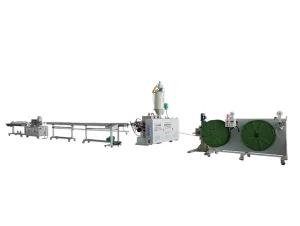
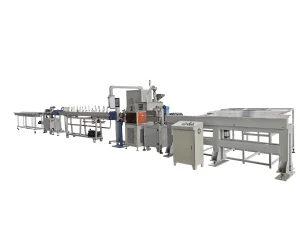
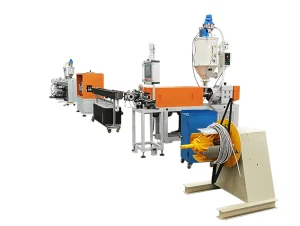
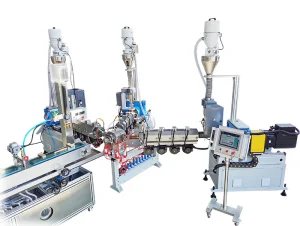
As the United Kingdom accelerates its infrastructure development programs and transitions towards a net-zero carbon economy, Greater London and the surrounding industrial belts (such as the M4 Corridor, Thames Estuary, and key logistics parks) are seeing a notable surge in demand for high-specification engineering components. Modern infrastructure programs like HS2 (High Speed 2), the expansion of utility corridors, and the rapid deployment of regional high-speed fiber networks (FTTH) demand polymer-coated elements that can withstand long-term mechanical stress and environmental exposure.
Historically, much of the heavy-duty machinery for the domestic market was supplied by local European engineering firms. However, tightening margins, supply chain bottlenecks, and the urgent need for custom-tailored solutions have prompted UK infrastructure procurement leads to seek strategic global manufacturing partners. Companies looking for high-performance coating extrusion lines in the London market need machines capable of processing challenging materials like TPU, TPV, PA, PVC, and HDPE. They require high concentricity, continuous operation, and precise gauge control to satisfy both British Standards (BS) and stringent European safety regulations.
Crosshead tooling specifically optimized for uniform layer distribution, reducing polymer waste by up to 15%.
Integrated Siemens or Omron control blocks monitoring melt temperature, haul-off speeds, and extruder RPM continuously.
Our technical framework addresses the challenges of high-speed extrusion, including thermal degradation, layer delamination, and sizing issues. We employ an iterative engineering approach to design robust, reliable production lines.
Modern high-speed co-extrusion relies on maintaining consistent polymer viscosity in the die block. BAOD's custom-engineered crosshead dies utilize a specialized flow channel design. This configuration distributes shear stress evenly across the substrate, preventing points of low flow velocity that can cause polymer degradation.
For complex applications like multi-layer polyamide hoses or composite braided tubes, our systems maintain a tolerance limit under ±0.03mm. This level of control is achieved by combining high-precision melt pumps with gravimetric dosing systems, which regulate raw material delivery to the barrel.
Thermal control during cooling determines the final physical properties of the extruded profile. Our vacuum sizing tanks feature an automated water level and temperature control circuit. This system maintains a stable thermal gradient to control shrinkage and prevent internal material stress. When combined with our high-speed rotary fly knife cutters, the process maintains clean cut-ends and precise product lengths, even at high line speeds.
The core challenge for machinery buyers in the London market is balancing capital expenditure (CapEx) with operational reliability (OpEx). BAOD Extrusion (Jiangsu Baodie Automation Equipment Co., Ltd.) addresses this by combining Taiwanese engineering standards with China's manufacturing supply chain.
By sourcing raw steel, high-torque gearboxes, and specialized machining components from the Yangtze River Delta industrial cluster, we control production costs without compromising on component quality. Every extruder, vacuum cooling tank, and cutting unit is assembled in our 16,000 m² factory under strict quality protocols. We source electrical systems from reliable suppliers like Siemens, Schneider, and Omron to ensure parts availability and straightforward maintenance for UK facilities.
Our vertical integration allows us to build and dispatch customized lines in a shorter timeframe compared to many European manufacturers. This helps clients establish production capacity quickly to meet project schedules.
Shipping high-performance machinery across continents requires reliable localized support. BAOD manages the transition from dispatch to installation through a structured compliance and support process. All systems destined for the UK are built to comply with CE and UKCA directives. This includes incorporating dual-channel safety switches, protective screens, emergency stop circuits, and conforming to low-voltage and machinery directives.
Our engineering team supports the onboarding process:
Get a custom technical quote tailored to your local site layout and material specifications.
Send Inquiry NowExplore our complete range of high-performance extrusion lines, calibration tanks, and rotary cutters, engineered for consistent quality across industrial, automotive, and medical applications.
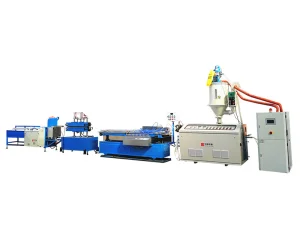
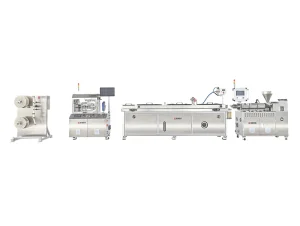
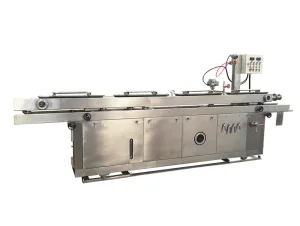
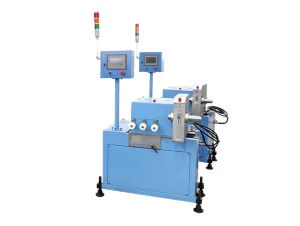
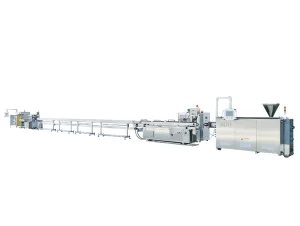
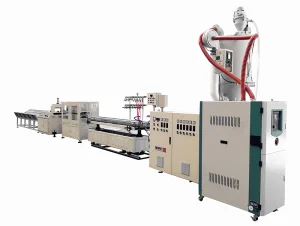
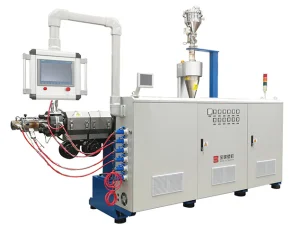
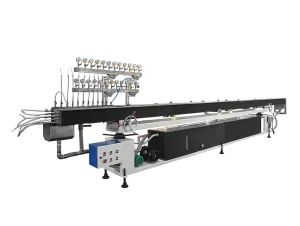
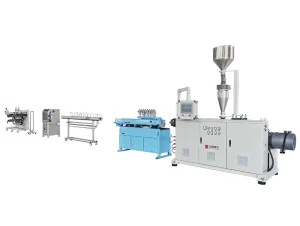
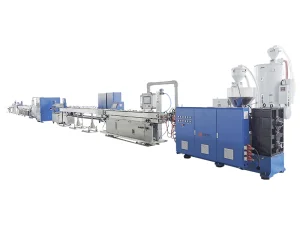
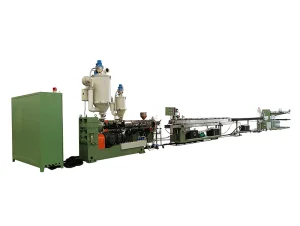
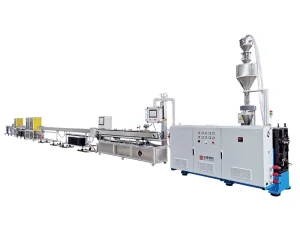
Achieving a durable polymer coating on substrates like steel wire, corrugated pipes, or multi-layer braided hoses requires precise control of melt parameters. Unlike standard profile extrusion, coating processes must account for the thermal characteristics and surface properties of the incoming substrate.
Consistent adhesion requires managing polymer rheology within the crosshead. Fluctuations in melt temperature change the material's viscosity, which can lead to variations in coating thickness or surface defects. BAOD systems address this using multi-zone PID controllers along the barrel and crosshead, maintaining temperatures within a ±1°C range.
Applying cold polymers directly to cold metal substrates can cause rapid cooling at the interface, leading to poor adhesion. For steel wire and metal pipe lines, we offer integrated pre-heating units. Pre-heating the substrate helps match its surface temperature to the polymer melt, promoting molecular bonding and reliable adhesion.
In applications like high-voltage cable insulation or pressure-bearing hoses, concentricity is critical for performance. Our crossheads feature adjustable micro-screws that allow operators to align the flow channels precisely. This setup, paired with laser diameter gauges, provides real-time tracking of dimensions to maintain consistent wall thickness.
The transition from the hot melt state to the solid state must be carefully managed to avoid internal stresses. Our downstream equipment—including vacuum calibration tanks, water baths, and haul-off units—is synchronized via PLC. This coordination minimizes tension on the profile during cooling, preventing shrinkage or warping.
Deploying production machinery requires clear quality standards. BAOD follows a structured testing and inspection process for every line before it leaves our facility. This verification helps confirm that each system meets the operational requirements of our international clients.
Our verification protocol includes:
Answers to common technical questions regarding system integration, material compatibility, and operational support.
Discuss your project requirements with our engineering team. We provide custom layouts, throughput estimates, and technical specifications tailored to your production goals.
 Baodie