Explore our foundational range of customized profile systems, automated downstreams, and high-precision composite extrusion lines.
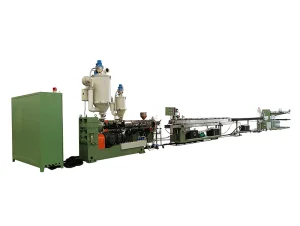
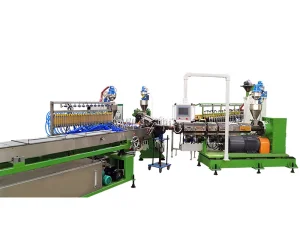
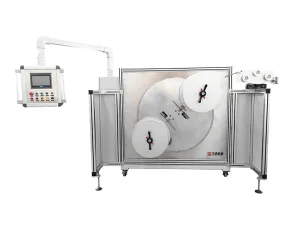
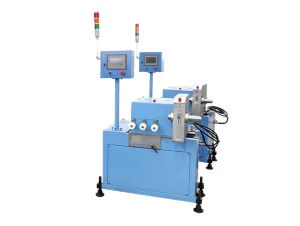
BAOD EXTRUSION (Jiangsu Baodie Automation Equipment Co., Ltd.), founded in 2002, is dedicated to designing, manufacturing, and supporting high-efficiency plastic extrusion lines globally. Grounded in 18 years of design engineering expertise for high-quality machinery in Taiwan, our original parent company, KINGSWEL GROUP, invested in establishing a state-of-the-art manufacturing base in Shanghai in 1999.
Our long-term commitment revolves around precision manufacturing processes, smart control systems, and machinery that complies with rigid international standards. We minimize processing tolerances while engineering highly integrated, robust production environments that support automated extrusion lines.
Manufacturing Heritage
Production Facility
Engineering & Production Crew
A comprehensive review of engineering standards, manufacturing processes, and the strategic positioning of China's automated extrusion lines in the global market.
Thermoplastic Elastomers (TPE), encompassing Thermoplastic Vulcanizates (TPV), Thermoplastic Polyurethanes (TPU), and Styrenic Block Copolymers (TPE-S), have redefined engineering requirements across sealing and structural applications. By combining the elastic properties of thermoset rubbers with the melt-processing characteristics of thermoplastics, TPE profiles offer:
Unlike standard rigid thermoplastics like PVC or ABS, TPE materials display pronounced non-Newtonian shear-thinning behavior under pressure. The viscosity of TPE compounds falls rapidly as shear rate increases, demanding precise temperature profiles and screw geometries.
At BAOD EXTRUSION, we optimize compression ratios, screw flight depth, and shear elements specifically for TPE resins to prevent localized degradation and maintain dimensional stability.
Modern global procurement teams from major automotive, aerospace, and medical sectors demand strict conformance to quality standards. Sourcing custom profile equipment requires validation across several key criteria:
In recent years, the market for elastomeric profiles has shifted away from conventional thermoset EPDM rubber towards high-performance TPE and TPV materials. This transformation is driven primarily by processing efficiency and environmental regulations. Thermoset EPDM requires long curing lines (either microwave or salt-bath ovens) that consume significant space and energy. In contrast, TPE profiles are extruded and cooled via conventional high-precision vacuum systems, allowing for faster production speeds, smaller machinery footprints, and 100% recycling of startup scrap.
"The ability to co-extrude multi-durometer profiles—such as a rigid structural backbone paired with an ultra-soft sealing lip in a single pass—has opened new design opportunities for automotive weatherstripping, architectural glazing, and PV module sealing."
For instance, in the electric vehicle (EV) sector, weight reduction is critical for range extension. Lightweight TPE and TPV formulations possess lower density (typically 0.90 to 0.98 g/cm³) compared to EPDM compounds (typically 1.2 to 1.3 g/cm³), directly contributing to vehicle weight reduction. Furthermore, the capacity for high-speed knitting or braiding reinforcements directly into TPV composite hoses makes them suitable for high-vibration cooling and thermal management circuits.
The manufacturing landscape has moved beyond simple cost arbitrage to center on technological capabilities, supply chain resilience, and precision engineering. Operating from Jiangsu, BAOD EXTRUSION represents the evolution of Chinese manufacturing—often called China Factory 4.0. Our engineering foundation, originating from Taiwan’s Kingswel Group in the late 1990s, combines precision tooling design with highly automated, integrated production lines.
Our 16,000m² facility features advanced CNC machining centers, precision grinding machinery, and testing equipment. Each extrusion line undergoes comprehensive testing and parameter calibration under load before shipment, ensuring fast installation and startup at customer plants worldwide.
Our machinery utilizes integrated PLCs (Siemens/Beckhoff) with user-friendly HMI touchscreens. By integrating laser diameter gauges and optical profile measurement devices into the control system, BAOD's lines adjust puller speeds and extrusion throughput automatically in a closed loop. This ensures that even with slight changes in raw material viscosity, cross-sectional dimensions stay within tight tolerances without operator intervention.
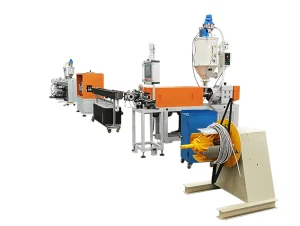
Original manufacturing solutions built for critical medical, industrial, and automotive applications.
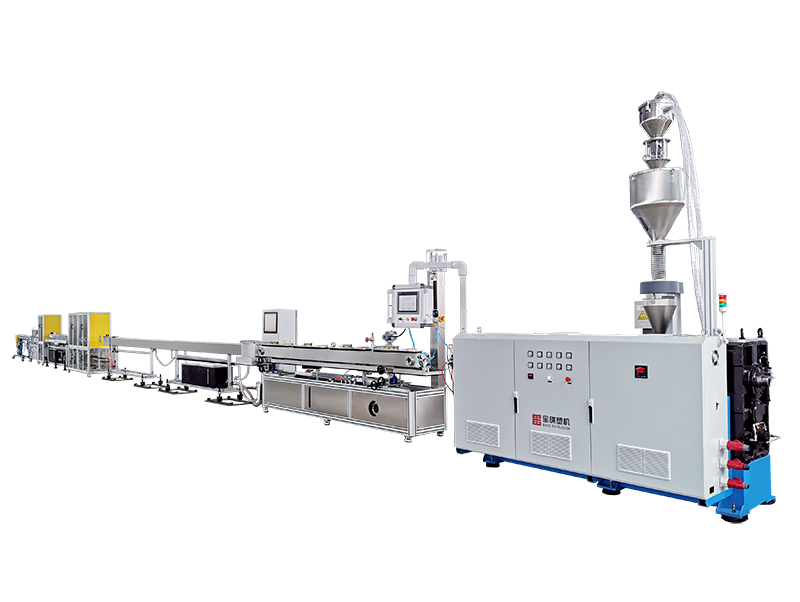
Engineered for tight-tolerance technical tubing with high linear speed stability.
Request Technical Specifications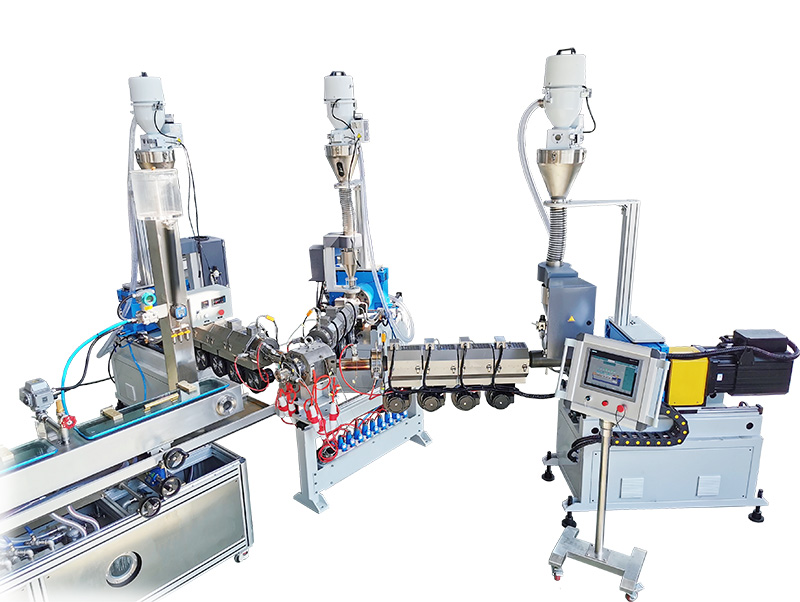
Ideal for automotive fuel lines, cooling lines, and corrugated wire harnesses.
Request Technical Specifications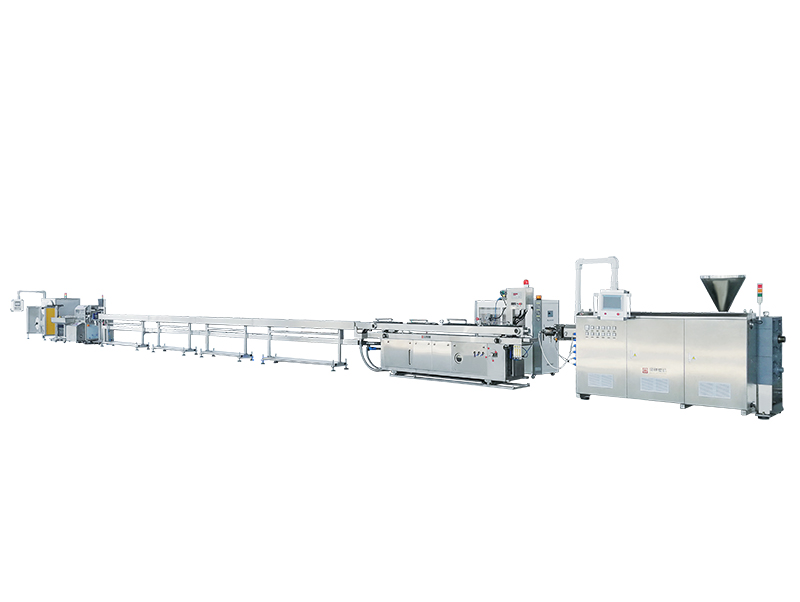
Meets cleanroom requirements for medical catheter and IV tube production.
Request Technical Specifications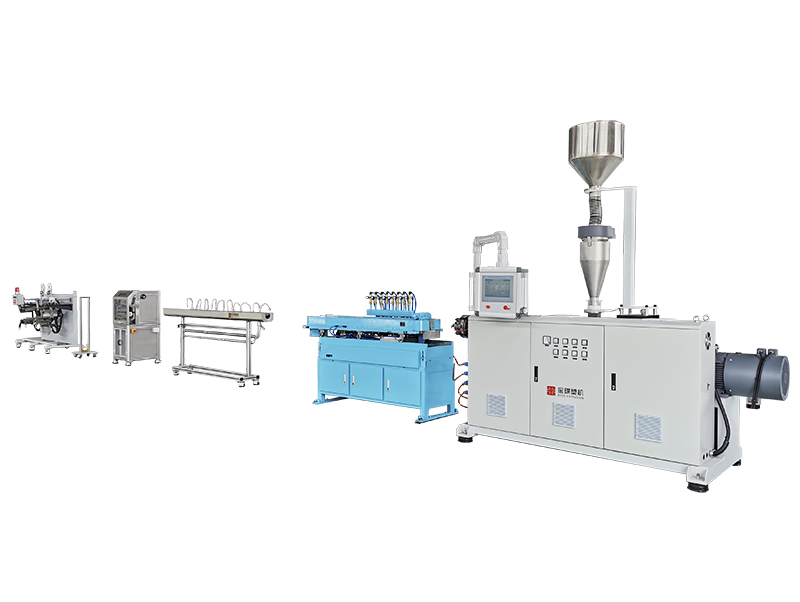
High-speed corrugating heads with optimized vacuum block cooling.
Request Technical Specifications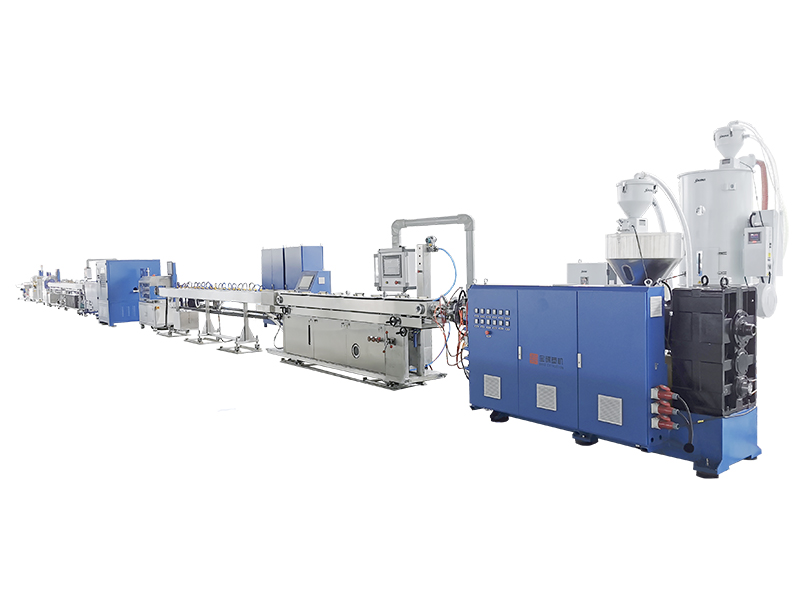
Reinforced high-pressure hoses combining inner/outer TPV and a yarn knit layer.
Request Technical Specifications
Precision co-extrusion systems designed for sealing strips and trim elements.
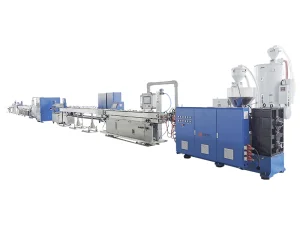
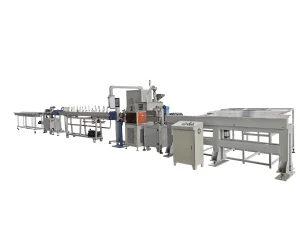
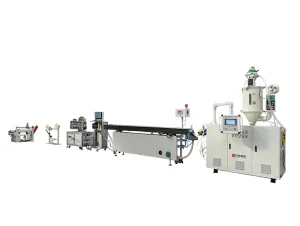
Request Technical SpecificationsExtruding high-performance TPE/TPV profiles requires careful design across the entire line to handle the physical properties of the materials. Below is the technical breakdown of the individual components that make up a BAOD precision system:
Standard single-screw extruders often suffer from pressure fluctuations when processing soft TPE (below Shore 70A). BAOD's custom screw geometries feature barrier flights and distributive mixing elements that deliver a homogeneous melt without overheating the material. Thermocouples and melt-pressure transducers inside the barrel provide real-time feedback to maintain stable pressure at the die head.
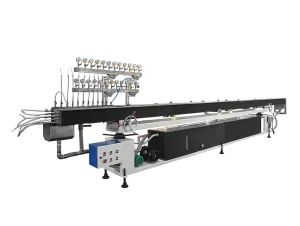
Due to the high thermal expansion coefficient of TPE, precise cooling is critical. Our vacuum calibration tanks utilize a dual-chamber configuration. The initial section provides intense, controlled vacuum calibration to stabilize the hot profile, while the secondary chamber uses immersion or spray cooling to solidify the material and prevent shrinkage or warping.
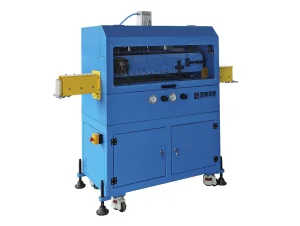
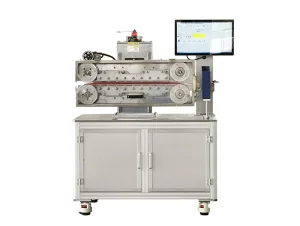
Soft elastomers can stretch or deform during pull-off. To address this, BAOD's TKB and QYP Series precision belt pullers use dual servo motors to synchronize belt speed. Downstream, our FQ Series Rotary Fly Knife Cutters use high-speed servo actions to cut profiles without collapsing the cross-sectional shape, ensuring clean cuts at high production speeds.
Our custom TPE profile systems are designed to meet the requirements of several key industries:
Co-extrusion lines that combine hard TPV/PP inserts with soft TPE sealing lips, incorporating metal-insert reinforcement and inline flocking or coating applications.
Precision multi-lumen tubing lines with cleanroom setups, utilizing stainless steel vacuum systems to produce silicone-alternative medical profiles.
Weatherproof profiles for window frames and structural glass run systems, optimized for long-term compression recovery and high weather resistance.
Stay informed with the latest updates from global plastics trade shows, comparative analyses, and technical case studies.
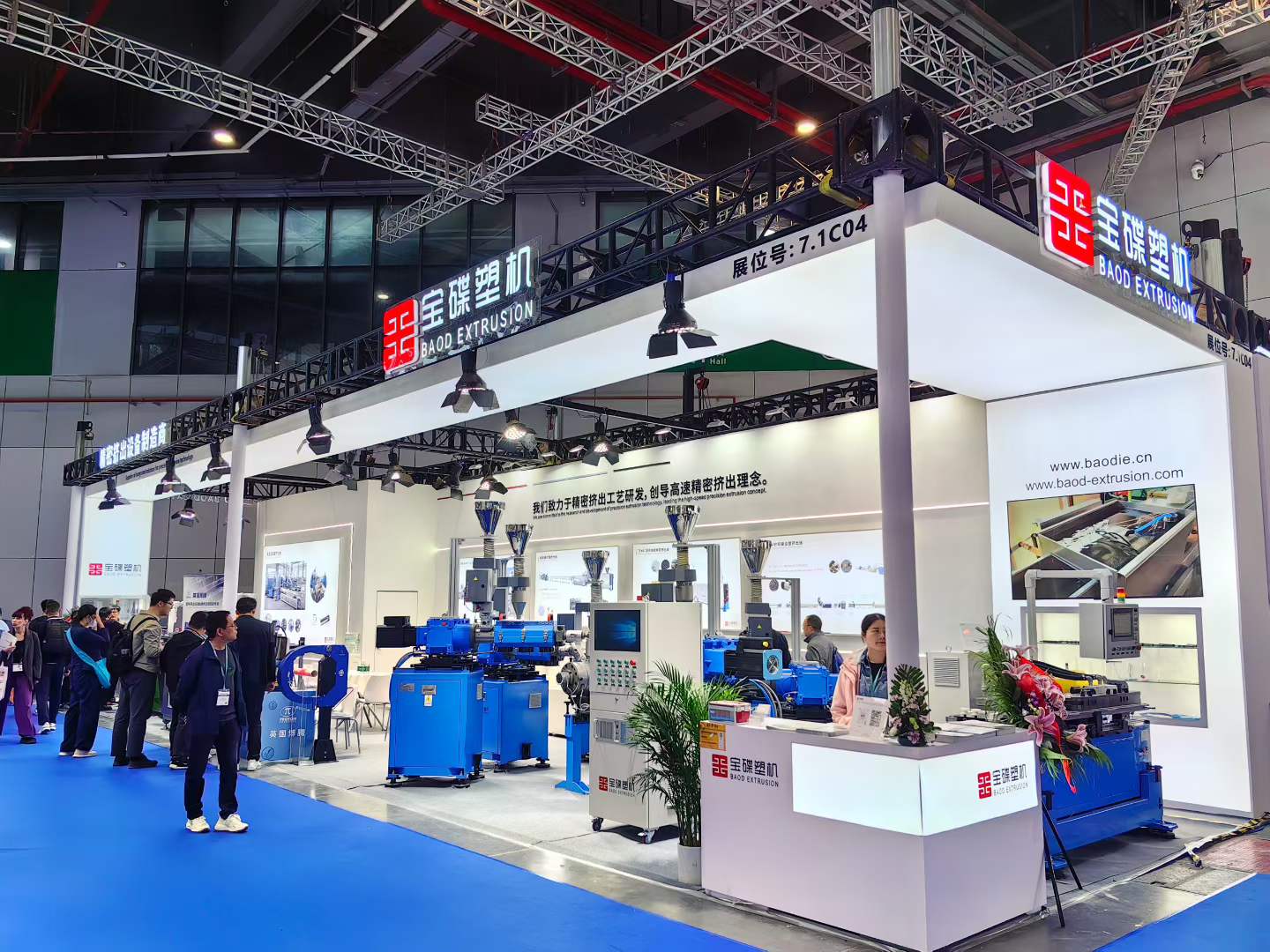
At Booth 7.1C04 in Shanghai, BAOD EXTRUSION presented its latest "Smart Extrusion & High-Efficiency Innovation" solutions, focusing on automated co-extrusion technology and digital process monitoring.
Read Article +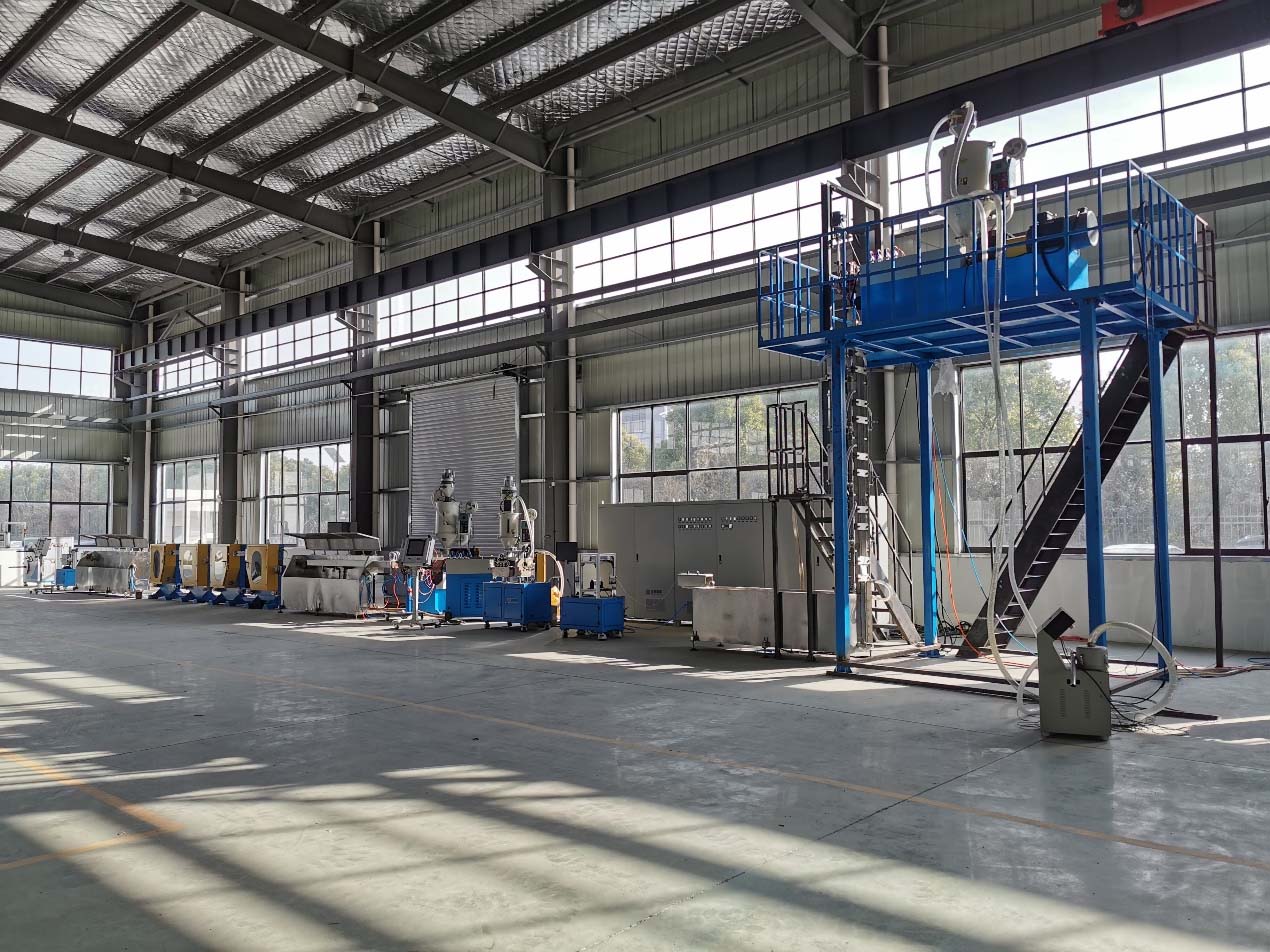
A technical review of the design requirements for mining-grade detonating tubes, highlighting the need for precise micro-diameter dimensions and mechanical reliability.
Read Article +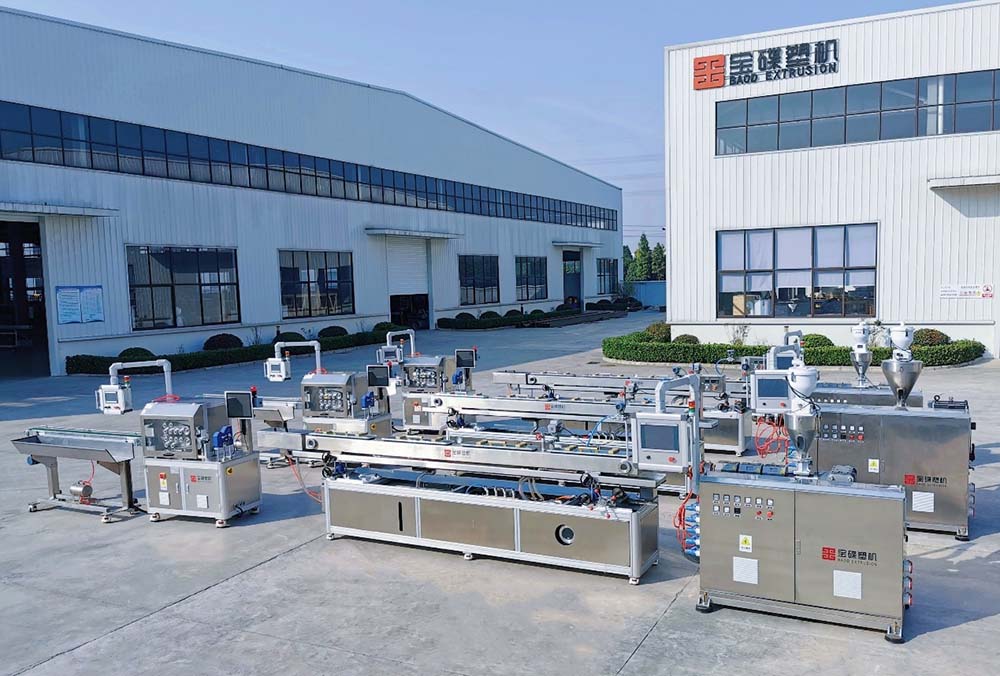
A comparison of core tooling tolerance control, vacuum sizing designs, and calibration techniques between domestic systems and traditional European manufacturers.
Read Article +Key information regarding materials, line speed, calibration, and equipment configuration for professional procurement managers.
TPE relies on physical blending of rubber and plastic phases, showing linear shear-thinning and predictable behavior at melt temperature. TPV contains a dynamically vulcanized rubber phase dispersed in a thermoplastic matrix, resulting in higher melt strength, higher melt viscosity, and a narrower temperature window. TPV requires higher torque motor drives and specialized screw profiles to maintain melt quality.
We employ an integrated closed-loop automation system combining precise gear melt pumps, dual-axis laser measurement systems, and responsive servo-driven belt pullers. When the laser gauge detects deviation, the system adjusts the extruder throughput or puller speed automatically, holding tolerances within ±0.03mm.
Our systems support multi-extruder configurations (up to 4 extruders feeding into a single profile die). This allows production of complex automotive trim and architectural seals combining rigid PP substrates, soft TPV seating components, and functional slip coatings in a single pass.
Although thermoplastic elastomers do not undergo cure reactions, many grades—particularly polyurethane-based TPEs (TPUs) and polyether-block-amides—are hygroscopic. Moisture levels exceeding 0.1% can cause internal voids, surface streaks, and inconsistent dimensions. We integrate automated desiccant wheel dryers directly into our material feeding systems to address this.
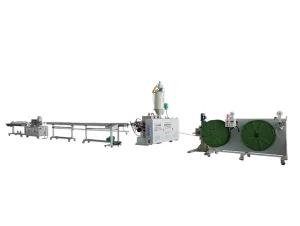
Complete your production setup with automated winding units, calibration tanks, and protective coating systems.
 Baodie