Highly customized, high-stability extrusion lines optimized for the local infrastructure and manufacturing demands of Oman.
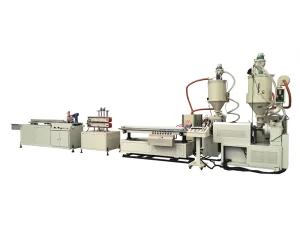
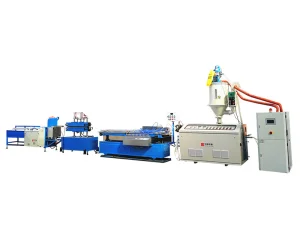
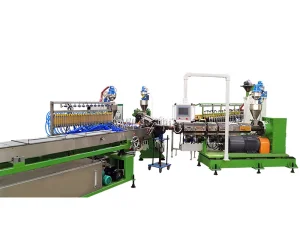
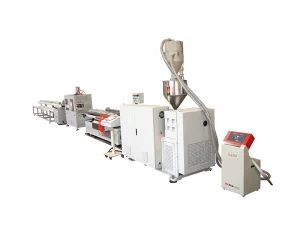
Under the visionary umbrella of Oman Vision 2040, the Sultanate of Oman is executing an ambitious strategy to diversify its industrial landscape. A primary pillar of this national mandate is the expansion of non-oil manufacturing sectors, particularly downstream polymer processing and engineering plastics. Key industrial hubs, such as Sohar Industrial City, Rusayl Industrial Estate, and the Salalah Free Zone, are undergoing rapid expansions to support localized production. As Oman reduces its dependency on imported plastic profiles and structural shapes, the demand for cutting-edge precision profile extrusion lines has reached unprecedented heights.
High-precision manufacturing in the Arabian Peninsula presents distinct engineering challenges. Extreme ambient temperatures, which frequently surpass 45°C during summer months, coupled with high relative humidity and airborne particulate matter, demand machinery with extraordinary structural integrity and thermal management systems. Standard extrusion setups often suffer from calibration instability, raw polymer degradation, and uneven cooling. Consequently, Omani polymer converters are shifting their procurement strategies away from entry-level equipment to partner with established engineering firms that deliver systems certified for high-ambient operational stability, thermal control, and mechanical longevity.
Achieving sub-millimeter tolerances in profile extrusion requires a synchronized, closed-loop technical framework. The process starts at the raw material feeding stage, where volumetric or gravimetric dosing systems ensure precise blend ratios. The heart of the extrusion line—the screw and barrel—must be optimized for the specific polymer’s rheological behavior. For instance, processing heat-sensitive PVC demands a customized twin-screw or specialized low-shear single-screw configuration, whereas highly amorphous polymers like PMMA and PC require high-torque, vented single screws to prevent air entrapment and bubble formation in the finished profile.
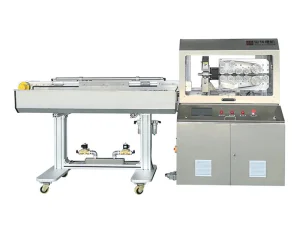
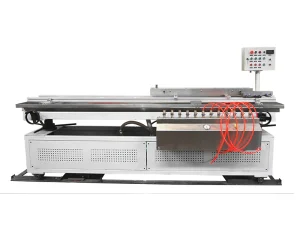
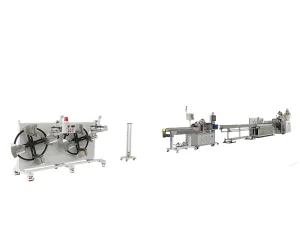
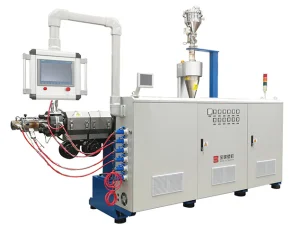
Below is a technical schematic overview of the critical hardware modules engineered by BAOD EXTRUSION to meet the highest precision standards:
Our single and twin-screw extruders are configured with bimetallic liners and specialized surface treatments, ensuring outstanding resistance to both corrosive and abrasive wear (particularly crucial when processing filled polymers like mineral-loaded PP or abrasive UHMWPE). The screw design incorporates barrier flight zones and mixing elements that optimize melt temperature uniformity, eliminating shear heating variations that cause dimensional deviations.
Maintaining profile shape integrity requires rapid, uniform heat extraction. Our vacuum calibration cooling tables are constructed entirely of SUS304 stainless steel to prevent corrosion from local industrial water supplies. Featuring 3D multi-axis adjustment platforms, operators can align the calibration tooling with absolute mechanical precision, reducing internal stresses and post-extrusion warp in the profile.
The entire extrusion line is managed via a centralized PLC control system (featuring Siemens or Beckhoff industrial CPUs). By integrating real-time pressure transducers, melt temperature sensors, and laser dimension-measuring gauges, the line self-adjusts parameters such as haul-off speed and screw RPM to maintain a continuous, self-correcting closed-loop cycle. This high level of automation reduces human error, limits scrap rate, and optimizes energy consumption.
Founded in 2002, BAOD EXTRUSION (Jiangsu Baodie Automation Equipment Co., Ltd.) has established itself as an international pioneer in the design, manufacturing, and global distribution of high-end plastic extrusion machinery. Leveraging over 25 years of engineering heritage in high-precision mechanical design—originally initiated under our parent organization, the KINGSWEL GROUP, which established its dedicated extrusion manufacturing base in Shanghai in 1999—we have continuously pushed the boundaries of polymer extrusion technology.
Today, operating out of our modern 16,000 m² state-of-the-art facility, our team of over 100 dedicated automation and polymer processing engineers focuses on delivering systems characterized by high precision, extreme productivity, and comprehensive operator safety. Our continuous R&D efforts are strategically focused on four core technical domains:
Explore our comprehensive range of high-speed, highly automated profile, hose, and tube extrusion systems engineered for ultimate performance in the GCC market.
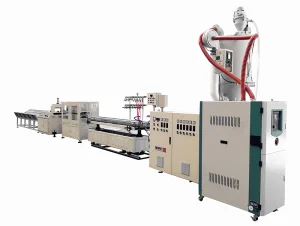
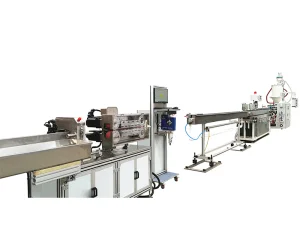
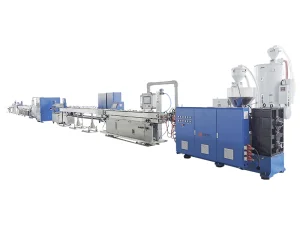
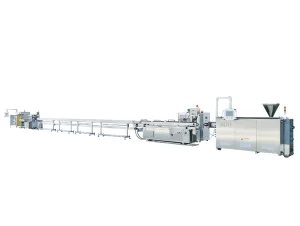
Procuring capital-intensive industrial machinery from China has evolved beyond simple cost arbitration. Forward-thinking Omani companies realize that working with Chinese manufacturers who adopt Industry 4.0 standards ensures both high efficiency and long-term reliability. At BAOD EXTRUSION, our manufacturing plant incorporates automated machining centers, laser-guided quality verification, and dynamic testing bays. This robust infrastructure enables us to deliver systems that compete directly with European manufacturers, while offering rapid lead times and localized service structures.
Through our comprehensive supply chain architecture, we guarantee vertical integration. From initial design modifications and screw profile simulation to physical mold building and automated assembly, every step of the process is managed under strict ISO 9001:2015 protocols. This integration minimizes production bottlenecks, ensures consistency, and allows us to offer specialized customizations that address the harsh ambient requirements of the Gulf region.
Integrating a new high-precision extrusion line into an existing Omani production plant requires careful coordination. We provide end-to-end commissioning support, from factory layout planning to onsite assembly, calibration, and personnel training. By training Omani operators on correct calibration configurations, cleaning cycles, and predictive maintenance schedules, we ensure that new systems achieve design performance levels quickly, minimizing startup waste.
Our commitment to compliance ensures that all supplied equipment meets regional health, safety, and electrical standards. We source global-brand electrical components (such as Siemens contactors, ABB inverters, and Omron temperature controllers) to ensure compliance with Oman’s electrical codes and simplify the sourcing of local spare parts. Furthermore, we assist clients with required customs clearance documentation, transit logistics to ports like Sohar or Salalah, and local transport logistics to minimize installation delays.
Frequently asked technical questions by polymer converters, plant engineers, and procurement specialists in the Oman and GCC markets.
Contact our technical engineering team to discuss customized profile extrusion lines, tooling design, and regional commissioning support for the Omani and wider GCC markets.
 Baodie