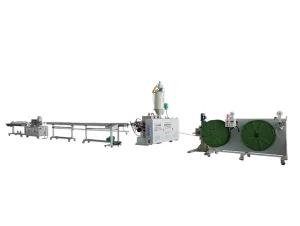
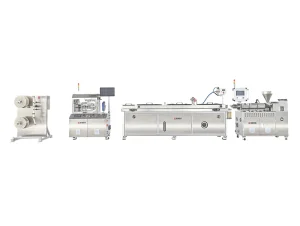
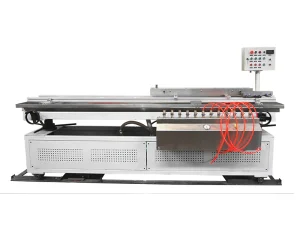
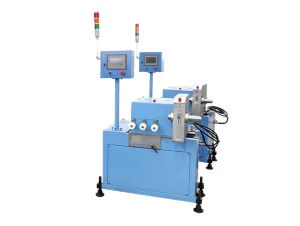
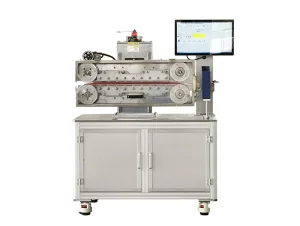
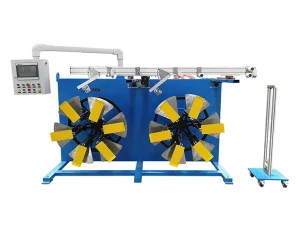
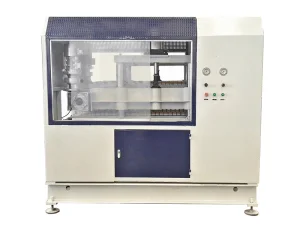
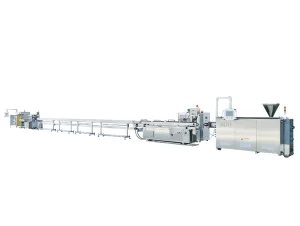
BAOD EXTRUSION (Jiangsu Baodie Automation Equipment Co., Ltd.), founded in 2002, is dedicated to the professional design, manufacturing, and global sales of advanced plastic extrusion equipment. Leveraging over 25 years of engineering experience in high-quality mechanical systems from Taiwan, our original parent company (KINGSWEL GROUP) established its primary production base in Shanghai in 1999 before expanding into our current state-of-the-art manufacturing facilities.
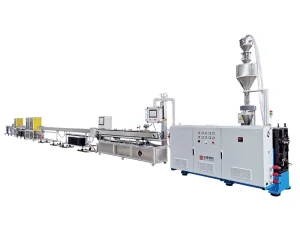
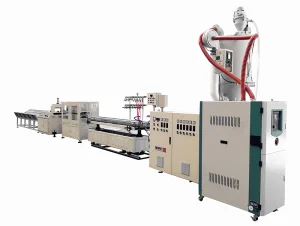
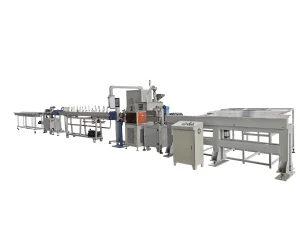
Extrusion lines built to fit ISO Class 7/8 cleanroom production setups with easy cleaning and non-contaminating design.
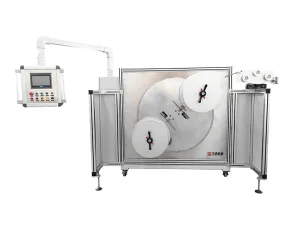
Real-time OD measuring, closed-loop puller speed adjustments, and intelligent coiling for non-stop performance.
Combining decades of Taiwanese precision design with German automation logic to deliver durable factory gear.
In modern healthcare, precision is not a metric of quality—it is the baseline of human safety. Medical grade Polyvinyl Chloride (PVC) tubing serves as the lifeline for crucial clinical operations, including hemodialysis, cardiopulmonary bypass, intravenous infusion, enteral nutrition, and respiratory support. As medical device OEMs push for smaller, multi-lumen, and co-extruded structures, the responsibilities placed on custom PVC medical tube manufacturers and factories have increased.
Sourcing from a custom PVC medical tube factory is no longer just about buying raw plastic parts; it is about establishing a secure, regulatory-compliant technical partnership. Extrusion lines must be capable of processing sophisticated formulations containing diverse plasticizer profiles—ranging from traditional DEHP-free blends to advanced alternatives like TOTM (Trioctyl trimellitate) and DINCH (Diisononyl-cyclohexane-1,2-dicarboxylate)—without causing material degradation or batch deviations.
"True precision in medical tube manufacturing is won or lost in the details of the extrusion line. If the thermal profile deviates by even 1°C, or if the vacuum calibration table experiences a minor pressure fluctuation, the physical integrity of the tube changes, compromising clinical safety."
The future of medical tubing is moving toward miniaturization, functional integration, and smart manufacturing. To maintain an edge in this evolving market, BAOD EXTRUSION actively pursues a technical roadmap that addresses these advancements:
Modern catheters and diagnostic lines need to carry fluids, house fiber-optic lines, and pass guide wires at the same time. This requires complex multi-lumen tubes with up to nine or ten internal channels, or multi-layer co-extruded designs where the inner layer provides chemical resistance (e.g., TPU or PE) and the outer layer provides soft, kink-resistant PVC properties. BAOD's custom die-heads and high-performance feed-blocks ensure thin layers are applied evenly and each lumen is shaped with high precision.
We are shifting from manual quality checks to real-time, automated adjustments. By integrating high-resolution laser OD gauges and ultrasonic wall-thickness monitors directly with our PLC systems, BAOD's extrusion lines continuously monitor physical dimensions. If the system detects a minor change in diameter, the puller speed or extruder screw RPM adapts automatically to correct it within milliseconds.
Medical-grade PVC compounds with alternative plasticizers like TOTM are sensitive to shear heat and stagnation. Any accumulation of material in the die head leads to degradation, black spots, and rejected batches. Our flow channel designs use advanced flow simulation to eliminate dead zones, keeping melt temperatures stable and residence times short.
Medical tubing must perform reliably across different clinical environments. A single extrusion machine needs the flexibility to run multiple distinct formulations, each designed for a specific medical application:
Requires high pump segment resilience, excellent resistance to dynamic fatigue, and very low plasticizer migration to maintain patient safety during blood filtration cycles.
Demands high clarity for easy fluid inspection, consistent flexibility across variable storage temperatures, and compatibility with standard solvent bonding agents during assembly.
Requires corrugated, reinforced, or smoothbore structures that prevent kink formation under patient movement, ensuring reliable oxygen flow and patient comfort.
To process these materials, our extrusion equipment uses optimized screw configurations with customized L/D ratios, dedicated screw flight geometries, and hard-plated surfaces that prevent chemical corrosion from released HCl gas.
Based in Jiangsu, BAOD EXTRUSION operates a modern 16,000-square-meter facility designed around smart production concepts. By combining our Taiwanese engineering foundation with local supply chain advantages, we offer a strong alternative to expensive European systems.
Our manufacturing processes utilize precision CNC machining centers to produce key parts like screws, barrels, and extrusion dies in-house. This internal control allows us to deliver high quality, fast customization turnaround times, and stable replacement part support.
By integrating our hardware with modern digital controls, our extrusion lines connect with remote management platforms. Our team can support users with online troubleshooting, software updates, and process tuning—reducing downtime for global factories.
Buying medical machinery involves strict regulatory oversight. Medical brands must prove that their manufacturing equipment adheres to guidelines like FDA 21 CFR Part 11, EU MDR, and local environmental standards.
Our equipment features access controls, digital audit trails, and data export functions to simplify audit readiness. Every surface in contact with the plastic melt is constructed from high-grade, corrosion-resistant steel, ensuring zero metal contamination and easy cleanability.
Whether you run facilities in North America, Europe, or Southeast Asia, BAOD provides complete documentation (including IQ/OQ/PQ support) to help you pass audits and meet regulatory requirements smoothly.
 Baodie