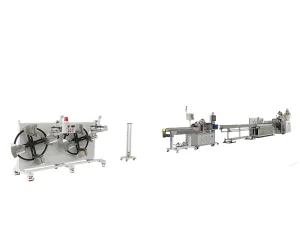
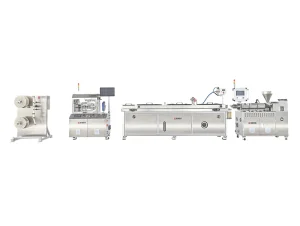
China PVC Tubing Machine Factory & High-Precision Extrusion Solutions
Redefining B2B Polymer Processing Through Advanced Automation, Industry 4.0 Integration, and Scientific Screw Design for Global Manufacturing Excellence.
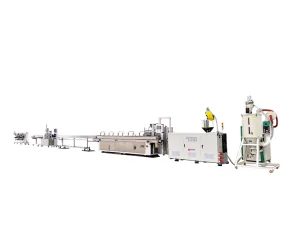
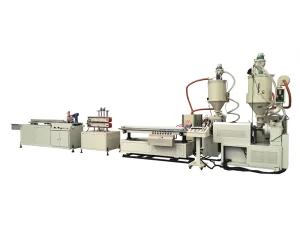
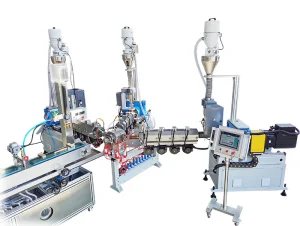
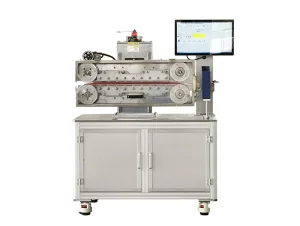
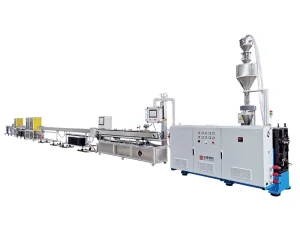
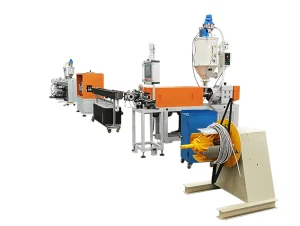
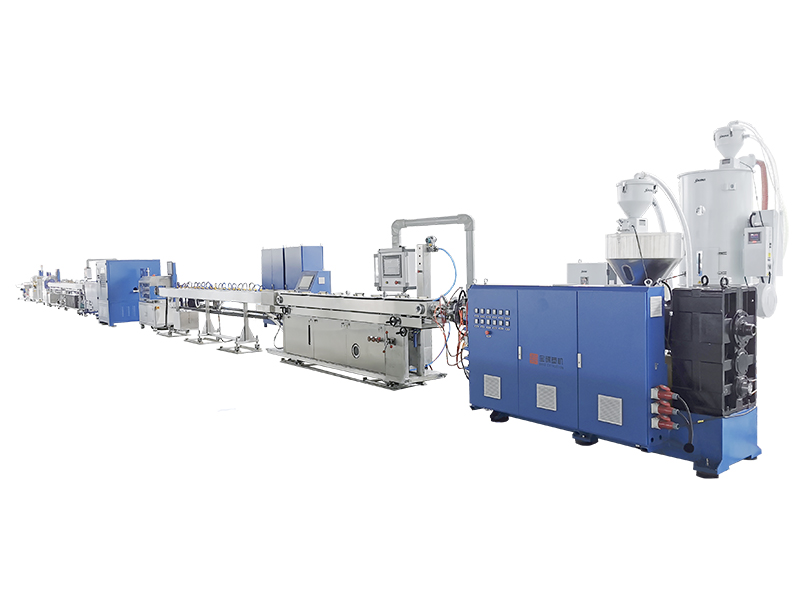
Primary Precision Extrusion Systems
Explore our industrial-grade PVC and custom polymer tube extrusion lines designed for high-tolerance specifications and continuous manufacturing stability.
Global Industry Status of PVC Tubing & Extrusion Machinery
Polyvinyl Chloride (PVC) tubing remains a cornerstone component across the world's most vital economic sectors, including biomedical devices, automotive fluids transport, architectural engineering, and consumer appliances. As global regulations tighten around chemical composition (such as the shift away from traditional phthalate plasticizers to bio-based alternatives like DOTP and TOTM), the machinery used to extrude PVC must undergo a structural evolution.
In modern industrial setups, a PVC tubing machine can no longer operate simply as a heated barrel and a basic pulling system. Today's manufacturing landscape demands extreme thermal control, real-time outer diameter (OD) and wall thickness tracking, and complex co-extrusion setups that combine PVC with reinforcements (polyester braiding) or co-extrude multiple layers to resist chemical permeation. B2B buyers in Europe, North America, and Japan are shifting away from manual setups to fully automated closed-loop systems where sensors continuously relay sizing data to the puller and extruder to adjust run-speeds dynamically.
"The modern PVC extrusion line is no longer just a mechanical assembly; it is an intelligent, thermodynamic system that must balance resin shear-rate limits with micro-level tolerances to produce defect-free technical tubes."
Why Global Manufacturers Procure Extrusion Lines from China
China has long moved past the era of low-cost replication. Today, leading Chinese manufacturers, particularly those in developed industrial regions like Jiangsu and Shanghai, offer unmatched supply-chain integration, precision engineering, and specialized automation interfaces. The core efficiency advantages that set premium Chinese factories apart include:
Integrated R&D Ecosystems: Proximity to major polymer research institutes and chemical manufacturing hubs allows rapid prototyping of screw geometries optimized for new PVC formulations (e.g., rigid PVC, high-elastic soft PVC, medical-grade formulations).
Component Standardisation with Global Brands: Industry-leading Chinese lines integrate control components from brands like Siemens (PLCs), Omron (temperature controls), ABB (frequency inverters), and Schneider (electrical parts), ensuring plug-and-play global servicing.
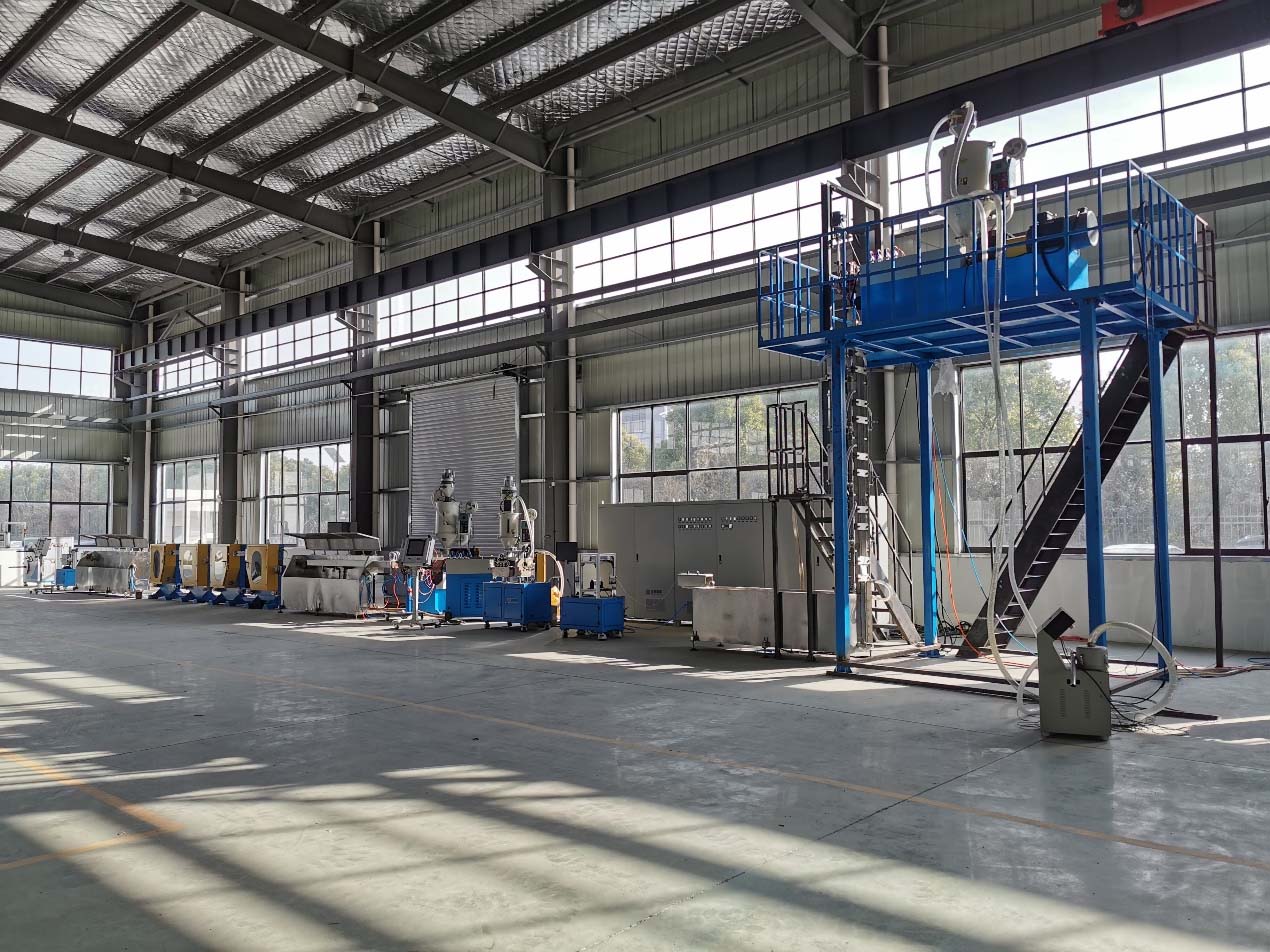
Optimized Cost-to-Performance Ratio: By sourcing heavy casting structures and precision machining locally in modern facilities like BAOD Extrusion's 16,000 m² site, B2B buyers obtain European-tier performance at a significantly lower capital expenditure (CAPEX).
Technical Analysis: PVC Extrusion Line Components and Process Dynamics
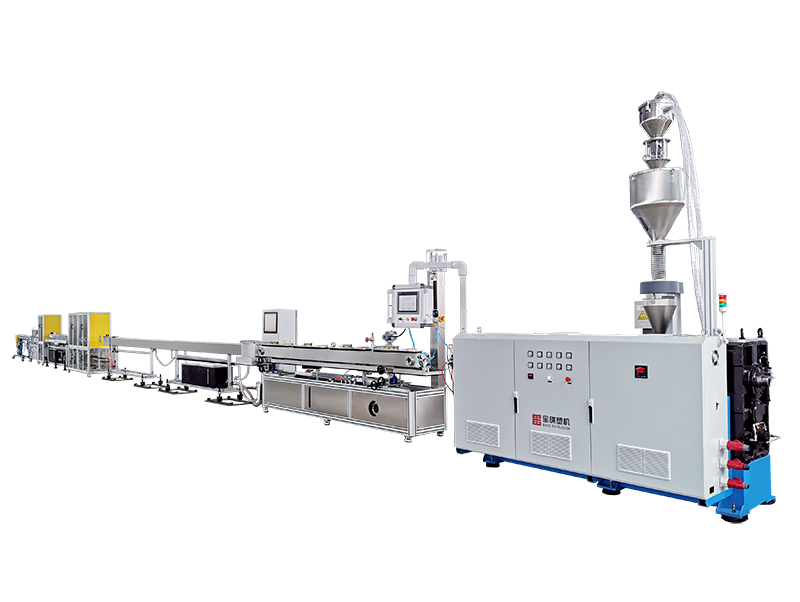
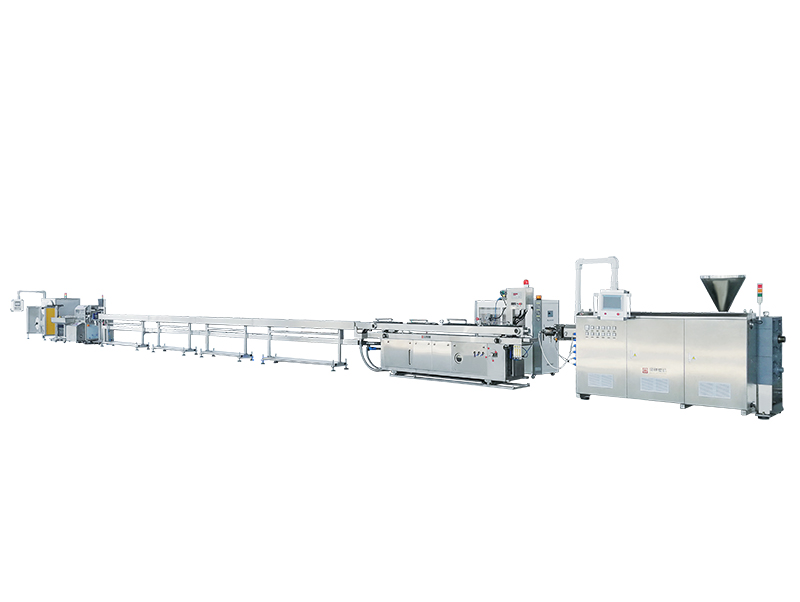
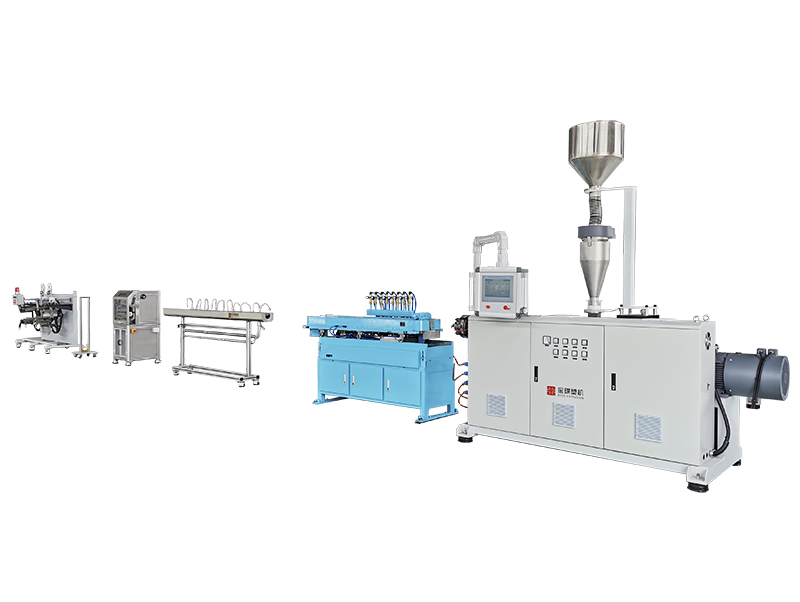
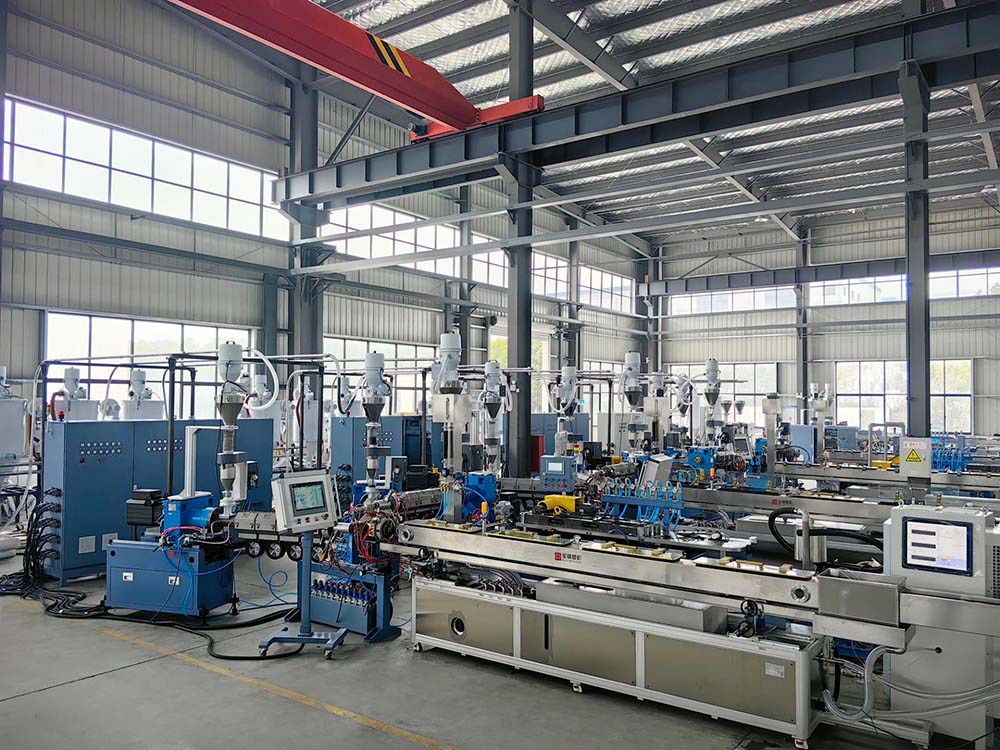
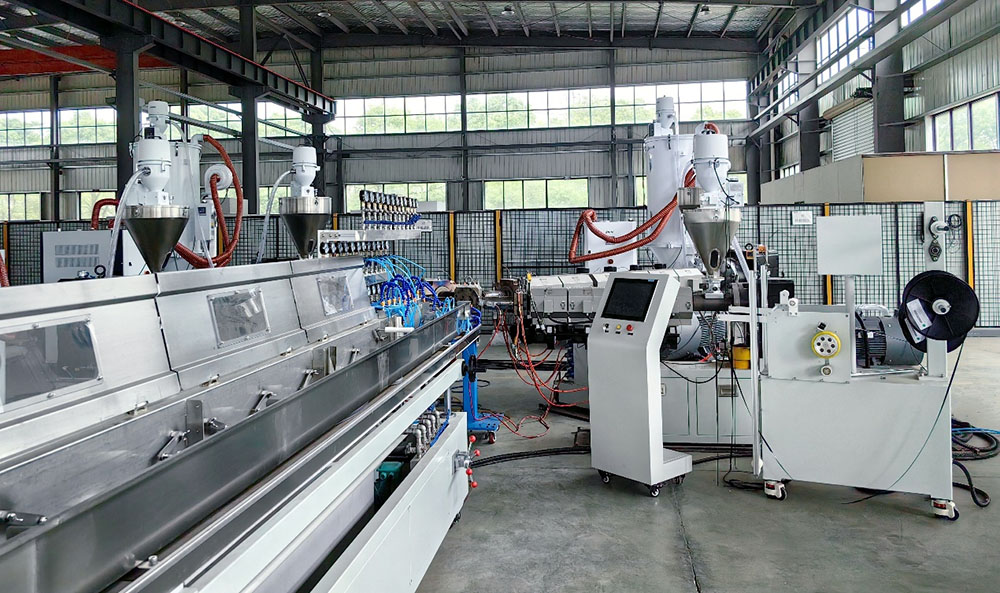
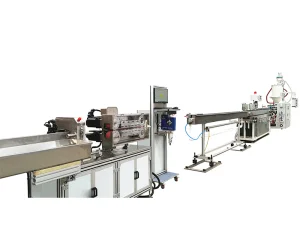
To successfully extrude high-precision PVC tubing, each component in the production line must operate with synchronized accuracy. Let us break down the physical modules of a premium PVC/polymer tubing extrusion line:
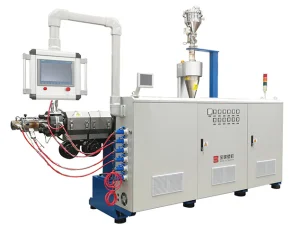
Extruder Screw & Barrel
Utilizes custom SJ-series single screw or twin-screw designs with specific L/D ratios (usually 28:1 to 32:1) to ensure uniform plasticization of PVC resin without thermal degradation.
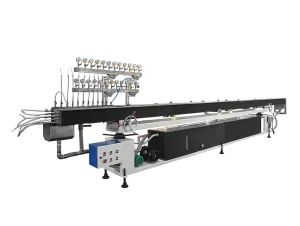
Vacuum Calibration
Maintains absolute tube circularity and precise outer dimensions. Utilizing a closed-loop pressure chamber filled with pressurized water spray for rapid, uniform cooling.
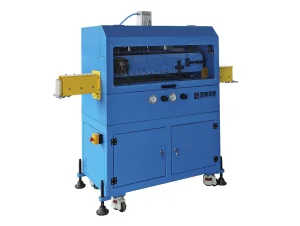
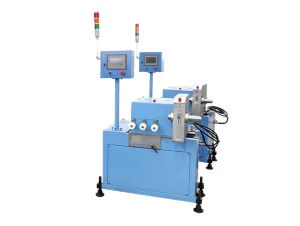
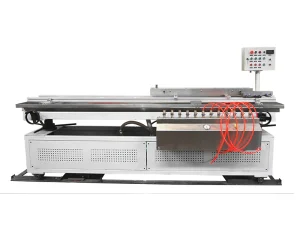
Haul-Off & Cut System
Employs TKB or QYP belt pullers for zero-slip traction, coupled with FQ series high-speed rotary fly cutters to deliver clean, square cuts at high linear speeds.
Polymer Extrusion Parameter Comparison
Different applications require different polymers. The table below highlights key processing differences that our engineering team configures for our clients:
Polymer Type
Processing Temp (°C)
Typical L/D Ratio
Calibration Medium
Primary Application Area
Soft PVC (Flexible)
160 - 180
28:1 - 30:1
Vacuum Spray/Water Bath
Medical Catheters, Braided Hose Core
Rigid PVC (U-PVC)
185 - 205
26:1 - 28:1
Sleeve Vacuum Calibrator
Conduit Pipes, Small-Diameter Cable Shielding
PU (Polyurethane)
190 - 210
30:1 - 32:1
Direct Coolant Bath
Pneumatic Tubing, Micro-bore Precision Hoses
PA (Nylon)
220 - 260
30:1 - 33:1
Vacuum Cooling Tank
Automotive Fuel Systems, High-Pressure Lines
B2B Procurement Application Profiles
Understanding user intent is crucial. A buyer looking for a PVC tubing machine often has one of the following high-precision applications in mind:
1. Medical-Grade PVC Tubing Production
Medical tubes (infusion lines, oxygen masks, blood dialysis circuits) require absolute safety and biological cleanliness. The machine setups must be tailored to run in cleanroom environments, utilizing specialized stainless steel vacuum tables, medical-grade extruders with zero-dust output, and advanced non-contact measurement tools to monitor tube diameter in real time. ISO 13485 standards guide the engineering of these systems.
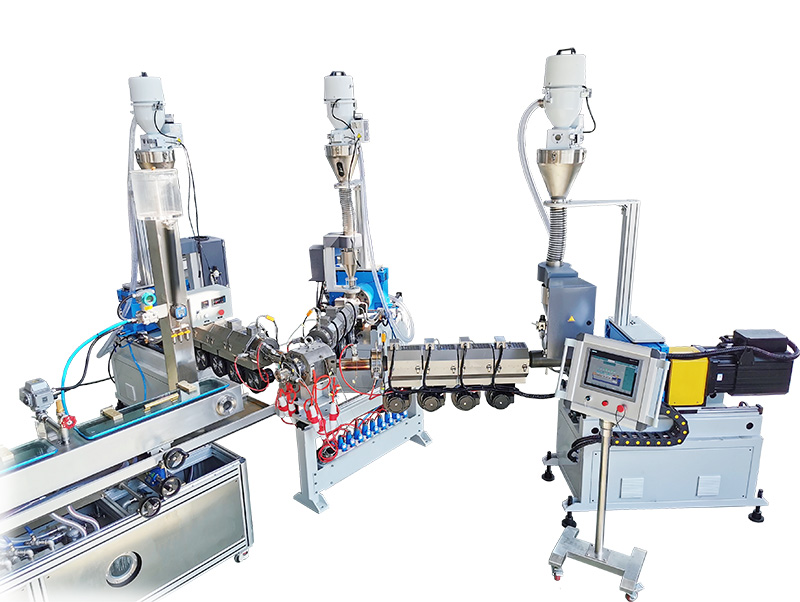
Automotive engine compartments expose tubing to severe heat, vibration, and fuel permeation. This requires multi-layer co-extrusion technology, combining a PVC inner lining, a braided reinforcement structural middle layer, and a chemical-resistant outer layer (such as TPV or PA). Our extrusion systems integrate multi-head die structures to achieve high-adhesion layer fusing at maximum throughput.
3. Micro-Bore and Small-Diameter Utility Tubing
For pneumatic systems and electrical wire conduits, maintaining thin wall thicknesses and high extrusion speeds is a mechanical challenge. Our high-speed single-wall corrugated pipe lines and small-diameter tube systems feature optimized die designs that reduce die-swell effects, ensuring maximum speed while avoiding wall collapsed defects.
Founded in 2002, BAOD EXTRUSION (Jiangsu Baodie Automation Equipment Co., Ltd.) is dedicated to designing, manufacturing, and marketing top-tier plastic extrusion machinery globally. Built on a foundation of 18 years of high-end design experience in Taiwan under the original parent company KINGSWEL GROUP (which established its first Mainland Shanghai plant in 1999), BAOD has grown to be a premier supplier of precision extrusion lines.
Our long-term R&D efforts are focused on four core pillars: precision extrusion technology, high-efficiency system configurations, advanced digital process automation, and active equipment safety protection. We welcome B2B purchasers to experience the difference our customized, Taiwan-engineered machinery brings to your production floor.
Key Development Directives:
Precision Extrusion Control
High-Efficiency Output Ratios
Digitalized IoT Automation
Operational Operator Safety
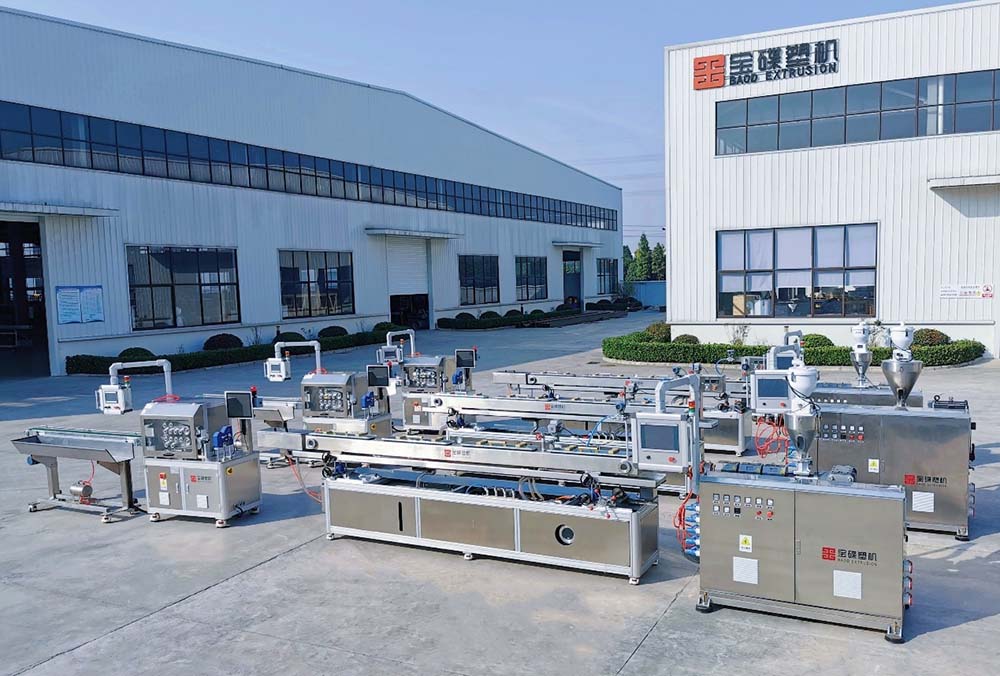
Industrial Application Gallery
Discover our specialized machinery models engineered to handle various polymer compounds and custom configurations for global B2B clients.
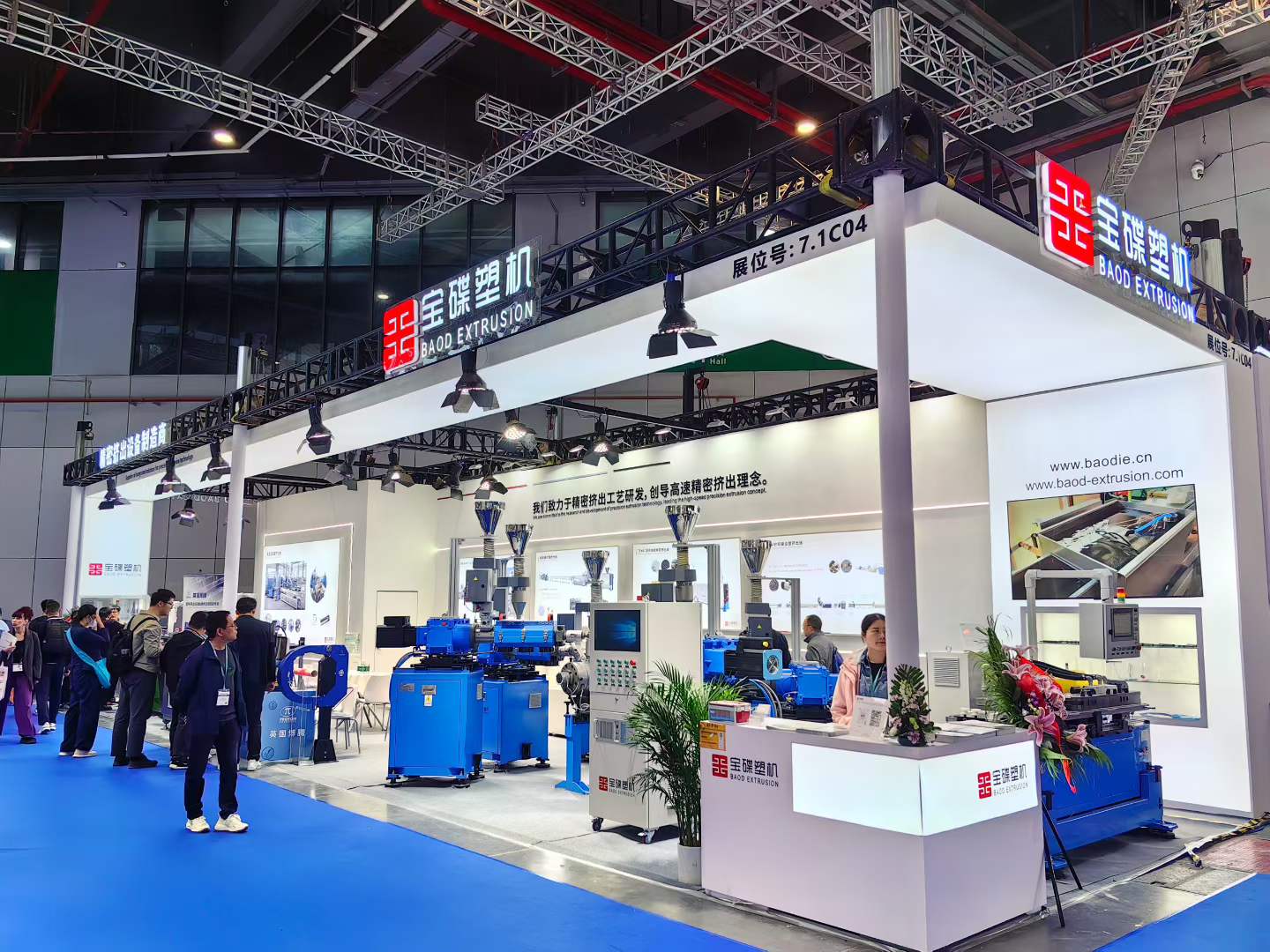
At the National Exhibition and Convention Center in Shanghai, BAOD EXTRUSION presented "Smart Extrusion & High-Efficiency Innovation" solutions, drawing international praise for precision tubing advancements.
Innovation & Reliability: Top 10 Customized Detonating Tube Extrusion Line Solutions
Exploring the engineering controls behind manufacturing hair-thin shock tubes for controlled industrial demolition and infrastructure blasting safety.
High Precision Multi-Lumen Tube Extrusion Line: China vs European Manufacturing Standards
An in-depth thermodynamic comparison of multi-lumen catheter wall-thickness tolerances, tooling design, and cost-to-performance benchmarks in global markets.
How China Leading OEM Automotive Tube Extrusion Line Supplier BAOD Maintains Compliance
Analyzing key strictures in the manufacturing of automotive fuel lines, cooling lines, and vacuum hoses under demanding environmental conditions.
Discover current manufacturing trends in automotive body seal co-extrusion, integrating metals and soft compounds for high-speed automated output.
Expert QA: PVC Extrusion Machinery Insights
Explore answers to core technical questions regarding precision, equipment configuration, and material considerations.
Q1: What are the differences between twin-screw and single-screw extruders for PVC tubing?
Twin-screw extruders (specifically conical twin-screw) are ideal for processing dry-blend PVC powders due to their excellent mixing profile, positive displacement pumping action, and uniform heat distribution. Single-screw extruders, like our SJ series, are preferred for PVC pellets (pre-compounded granules), offering simplified operation, high shear efficiency, and lower maintenance costs.
Q2: How does BAOD achieve high precision in medical-grade PVC tube wall thickness?
We integrate closed-loop feedback control systems that interface ultrasonic outer-diameter and wall-thickness gauges directly with the Siemens PLC. If any deviation is detected, the belt puller speed and melt pump pressure adjust automatically in micro-seconds to ensure thickness deviations stay within ±0.03mm.
Q3: Why is vacuum calibration crucial for PVC profile and tube manufacturing?
PVC has a high heat-deflection rate and experiences post-die swelling. The vacuum calibration table uses high-negative-pressure chambers to draw the hot polymer melt against a precisely sized brass or stainless-steel sleeve, while cold water spray solidifies the material instantly, locking in the required dimensions.
Q4: Can these machines process alternative flexible plastics like PU, TPV, or PE?
Yes. By changing the screw geometry design (compression ratio) and adjusting the heating profiles within the PLC touch-screen panel, our lines can extrude Polyurethane (PU), Thermoplastic Vulcanizates (TPV), and Polyethylene (PE) with identical efficiency and tolerance.
Q5: What safety protocols are standard on BAOD extrusion lines?
All BAOD lines are equipped with automatic over-pressure melt relief systems, cold-start screw protection (which prevents rotation until target temperatures are met), emergency stop switches along the length of the line, and physical shielding guards around the high-speed cutter systems.
Secondary Component & Special Coating Lines
Complete your production ecosystem with our auxiliary equipment, downstream components, and protective coating systems.
 Baodie