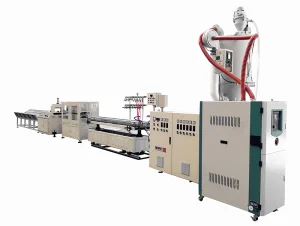
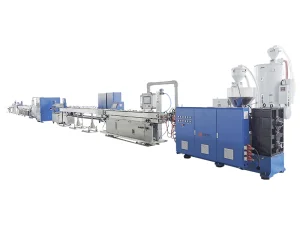
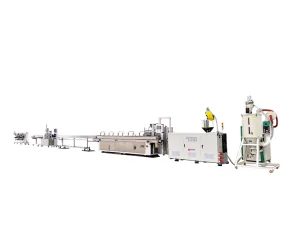
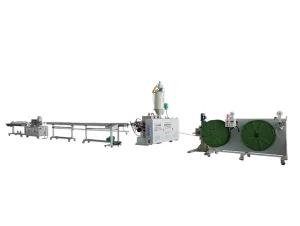
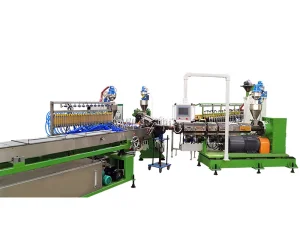
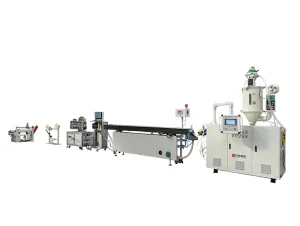
Highly automated systems engineered to deliver absolute dimensional tolerance control, fast line speeds, and multi-polymer integration capabilities.
Thermoplastic Vulcanizates (TPVs) represent a unique class of materials that fuse the processing ease, recyclability, and design flexibility of thermoplastics with the elastomeric sealing properties and durability of vulcanized thermoset rubbers. As automotive cooling, chemical transportation, and heavy-duty industrial fluid systems transition from traditional EPDM rubber to advanced elastomers, the demand for precision-extruded TPV hoses has surged dramatically.
Unlike standard unreinforced tubing, dynamic automotive turbocharger, cooling, and high-pressure oil lines demand robust mechanical strength to resist burst pressures. Integrating a synthetic yarn knitting structure directly within the wall of a co-extruded TPV tube provides extreme tensile toughness. This design uses a multi-layer process: an inner TPV liner resists fluid degradation, a middle knitted layer distributes structural tension, and an outer TPV jacket protects the hose from heat, environmental ozone, and mechanical wear.
Achieving flawless interfacial adhesion between the vulcanized rubber particles inside the TPV matrix and the synthetic reinforcement fabric is critical. Delamination under cyclical heat-pressure stresses remains the primary failure mode in sub-standard hose products.
Dedicated to designing, manufacturing, and supporting high-precision plastic extrusion equipment since 2002.
BAOD EXTRUSION (Jiangsu Baodie Automation Equipment Co., Ltd.) was established in 2002 as a premium designer and builder of complete plastic extrusion production systems. Anchored by 18 years of specialized engineering experience in Taiwan, our parent organization (KINGSWEL GROUP) invested in setting up a modern manufacturing center in Shanghai in 1999 to support rapid development in structural polymer extrusion.
Over the last 25 years, our teams have pioneered solutions in multi-lumen medical tubing, corrugated fuel conduits, high-speed profile lines, and heavy-duty co-extruded composite knit hoses. With a 16,000 m² state-of-the-art production workshop and a dedicated assembly facility, we guarantee every extrusion system complies with strict international tolerances.
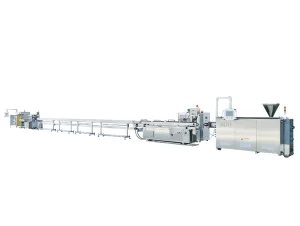
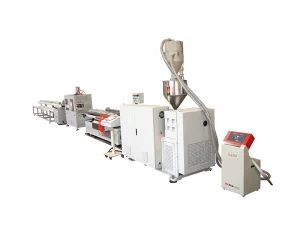
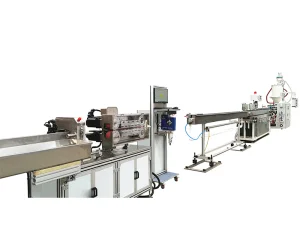
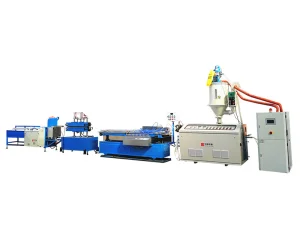
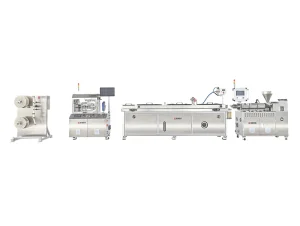
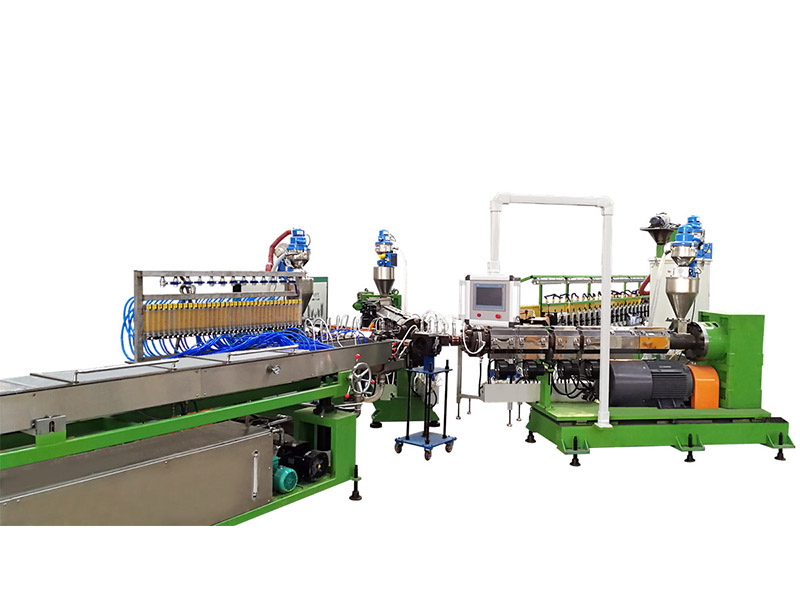
Production of high-tolerance composite TPV hose requires a closely synchronized, multi-station hardware layout. The extrusion line contains distinct process zones:
1. Inner Layer Extrusion: Using a high L/D ratio single-screw extruder optimized for dynamic vulcanizate dispersion, ensuring complete plasticization without shear-heating degradation.
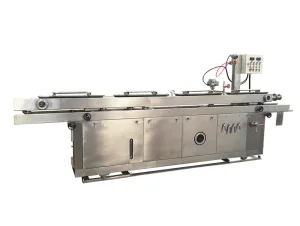
2. Vacuum Calibration & Cooling: The extruded inner tube goes through an auto-vacuum sizing tank to freeze the tube dimensions. High stability is required here to ensure a perfect base for knitting.
3. Multi-Strand High-Speed Knitting Machine: Synthetic yarn (polyester or aramid) is knitted or braided spirally over the inner core. Precise tension control prevents core collapse or geometry distortion.
4. Outer Jacket Co-Extrusion: The knitted inner tube runs through a crosshead die where the outer TPV jacket is applied. Specialized melt-adhesion techniques link the inner and outer layers.
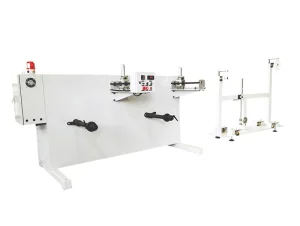
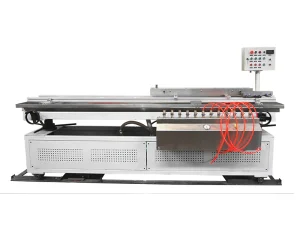
5. Haul-off and Precision Winding: Controlled caterpillar haul-off devices pull the hose at precise line speeds, synchronized with the extruder RPM to maintain wall thickness, before spooling.
| Parameters | Standard Specification | High-Performance Upgrades |
|---|---|---|
| Line Speed Range | 5 - 15 m/min | Up to 30 m/min |
| Diameter Tolerance | ±0.10 mm | ±0.05 mm (Closed-loop) |
| Knitting Density | Adjustable (75%-95%) | Programmable Multi-pattern |
| Extruder L/D Ratio | 28:1 or 30:1 | 33:1 Barrier Screw with Venting |
| Automation System | PLC with Basic HMI | SCADA with Real-time Diagnostics |
Highly-engineered manufacturing systems built for continuous uptime, high material yield, and reduced waste in demanding operating conditions.
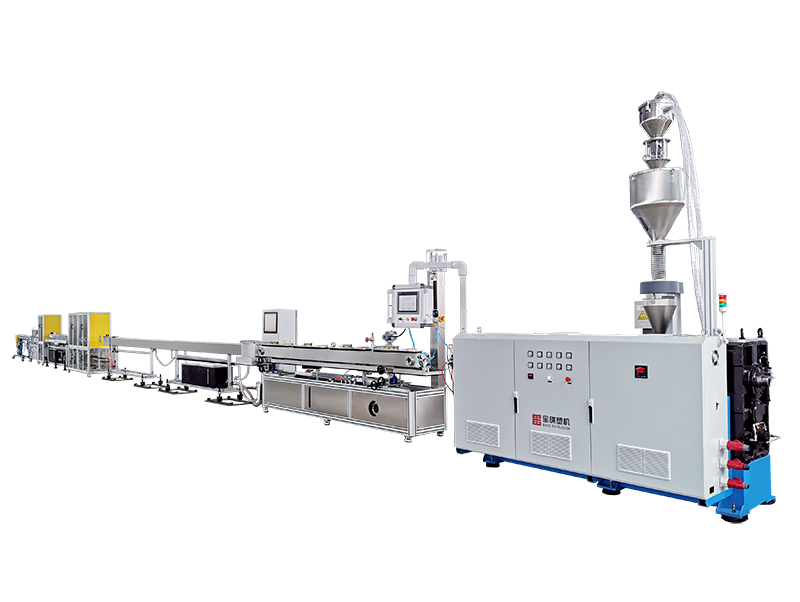
High-stability vacuum sizing technologies for micro-tubing. Ideal for automotive, medical, and fluid conveyance applications requiring fine diameter controls.
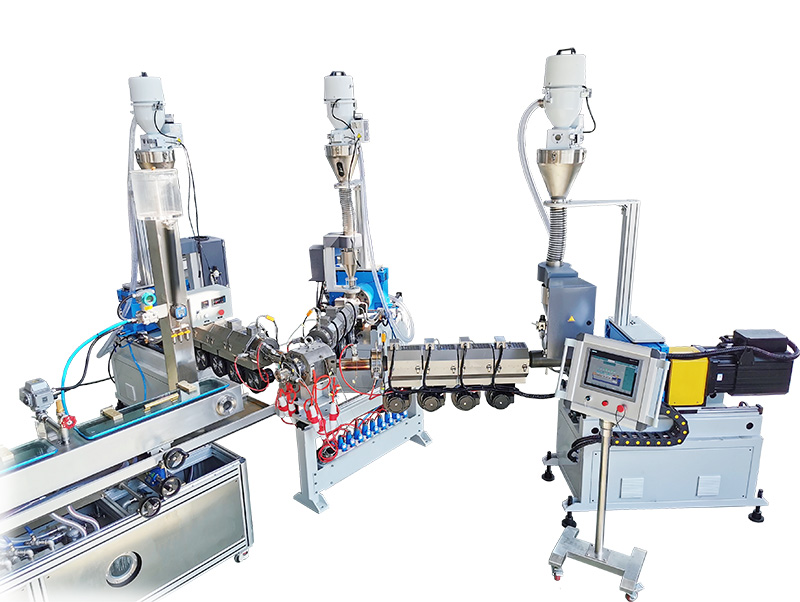
Advanced multi-layer polymer configuration system featuring automated corrugator units for fuel vapor, brake lines, and HVAC applications.
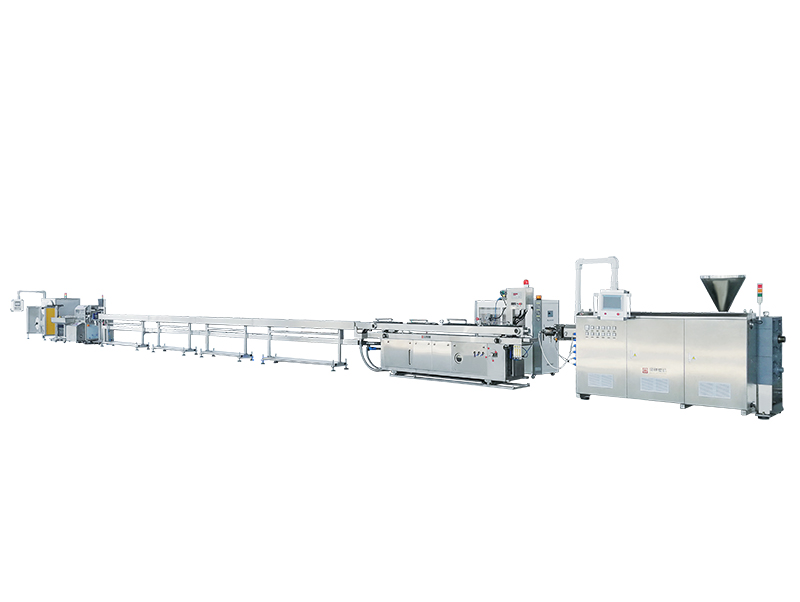
Medical-clean setup. Class 10,000 cleanroom design compliance.
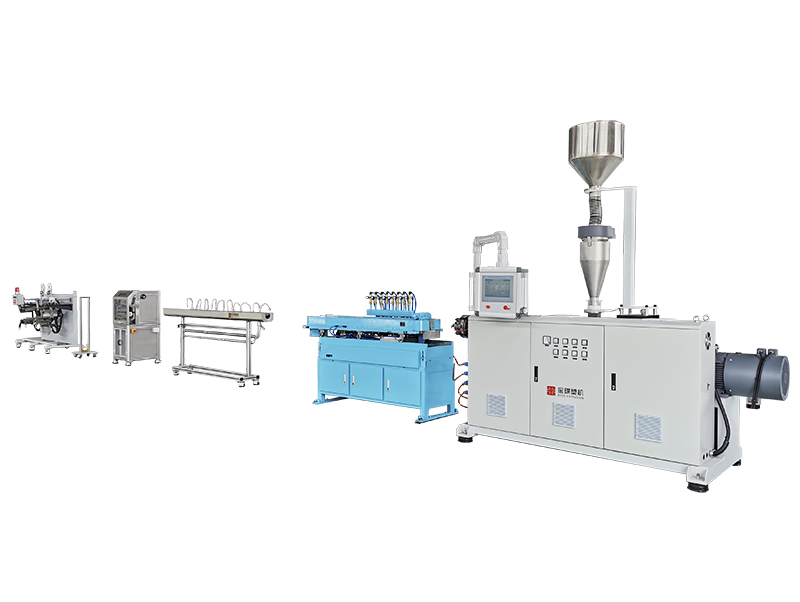
High speed continuous forming block design.
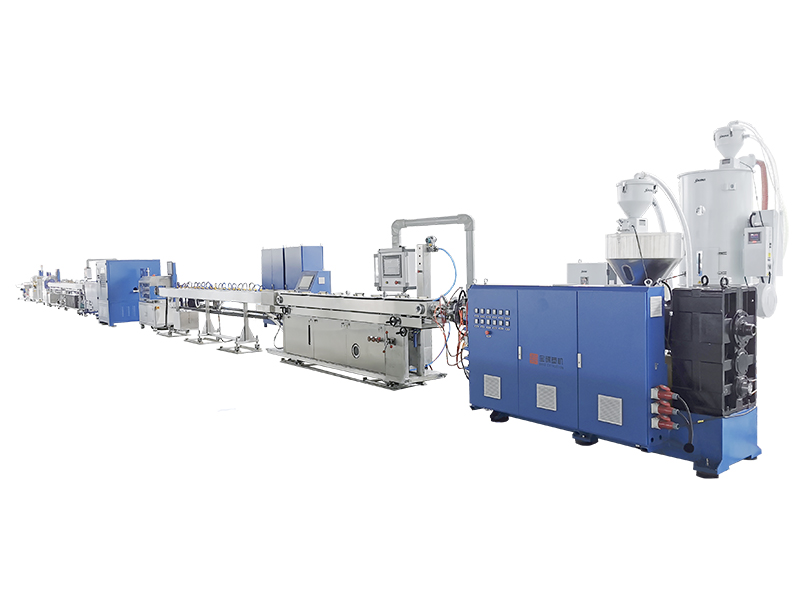
Integrated braiding stations for high-pressure hoses.
Integrated metal-carrier insertion and punching units.
Global automotive manufacturers and Tier-1 fluid system integrators face stringent performance protocols. High-performance hoses must comply with international standards such as SAE J2044 for quick connect systems, DIN 73379 for fuel hoses, and ISO 3949 for textile-reinforced hydraulic hoses. To meet these certifications, extrusion lines must operate within highly controlled processing windows.
Furthermore, global supply chains demand full process traceability. Industrial IoT architectures integrated into BAOD extrusion lines record extrusion temperatures, head pressure, melt pump throughput, and laser gauge measurement logs. The collected datasets can be associated directly with product batches, giving OEM buyers verification of structural integrity and design conformity.
One of the primary drivers of the EPDM-to-TPV shift is recyclability. Thermoset EPDM rubber cannot be re-melted and reused due to its cross-linked chemical structure. TPV, however, can be granulated and reprocessed multiple times, significantly reducing clean scrap waste on the factory floor. This makes TPV lines highly attractive for corporations targeting net-zero carbon footprints.
Our systems are built to run both virgin formulations and post-industrial recycled TPV polymers without physical variance. Extruder barrels are configured with degas venting zones to extract volatile organic compounds (VOCs) and low-molecular gases released during polymer processing. This design ensures that the physical properties of the inner tube remain consistent even when using complex recycled polymer blends.
Mapping the technical milestones of TPV Composite Hose Extrusion through the next decade.
Integrating high-speed laser measurement gauges directly downstream from the water tank. Real-time feedback loops automatically adjust caterpillar pull speeds to keep outer diameters within tight tolerances.
Developing complex multi-axial braiding modules capable of running dual fiber compounds concurrently. This delivers high burst pressure resistance while maintaining overall tube flexibility.
Cloud-integrated sensor suites that monitor barrel temperature fluctuations, melt pressure curves, and mechanical vibration, predicting wear patterns to schedule maintenance before unexpected downtime occurs.
Optimizing screw profiles, compression ratios, and barrel heating zones to run new bio-derived TPV formulations without risking chain cleavage or physical property degradation.
Expert technical answers regarding TPV extrusion processes, machine operations, and system maintenance.
Typically, Thermoplastic Vulcanizates (TPVs) require a temperature profile ranging from 180°C to 210°C, depending on the PP/EPDM ratio and the viscosity of the specific grade. High shear heating must be avoided during screw compression to prevent localized polymer degradation, which can lead to visual defects and lower mechanical properties in the finished hose.
We use customized crosshead co-extrusion tooling that applies the outer TPV jacket onto the knitted yarn at a controlled pressure. When necessary, we integrate a dedicated adhesive-agent application station or apply special primer coatings to the fiber. This creates strong chemical and mechanical interlocking, helping prevent layer separation under pressure cycles.
Yes. Our extrusion lines feature modular screw and barrel designs. By replacing the screw geometry or adjusting heat control parameters, the system can run other thermoplastic materials like PVC, PU, PA (Nylon), PE, and traditional TPE elastomers.
We provide full-lifecycle localized technical assistance. This includes Factory Acceptance Testing (FAT) in our production workshop, on-site commissioning, operator training, and remote diagnostic access via PLC. We also stock critical wear parts (screws, barrels, heating bands, cutter blades) in our inventory to ensure fast delivery when needed.
Stay updated on our technological developments, global exhibition participation, and technical innovations.
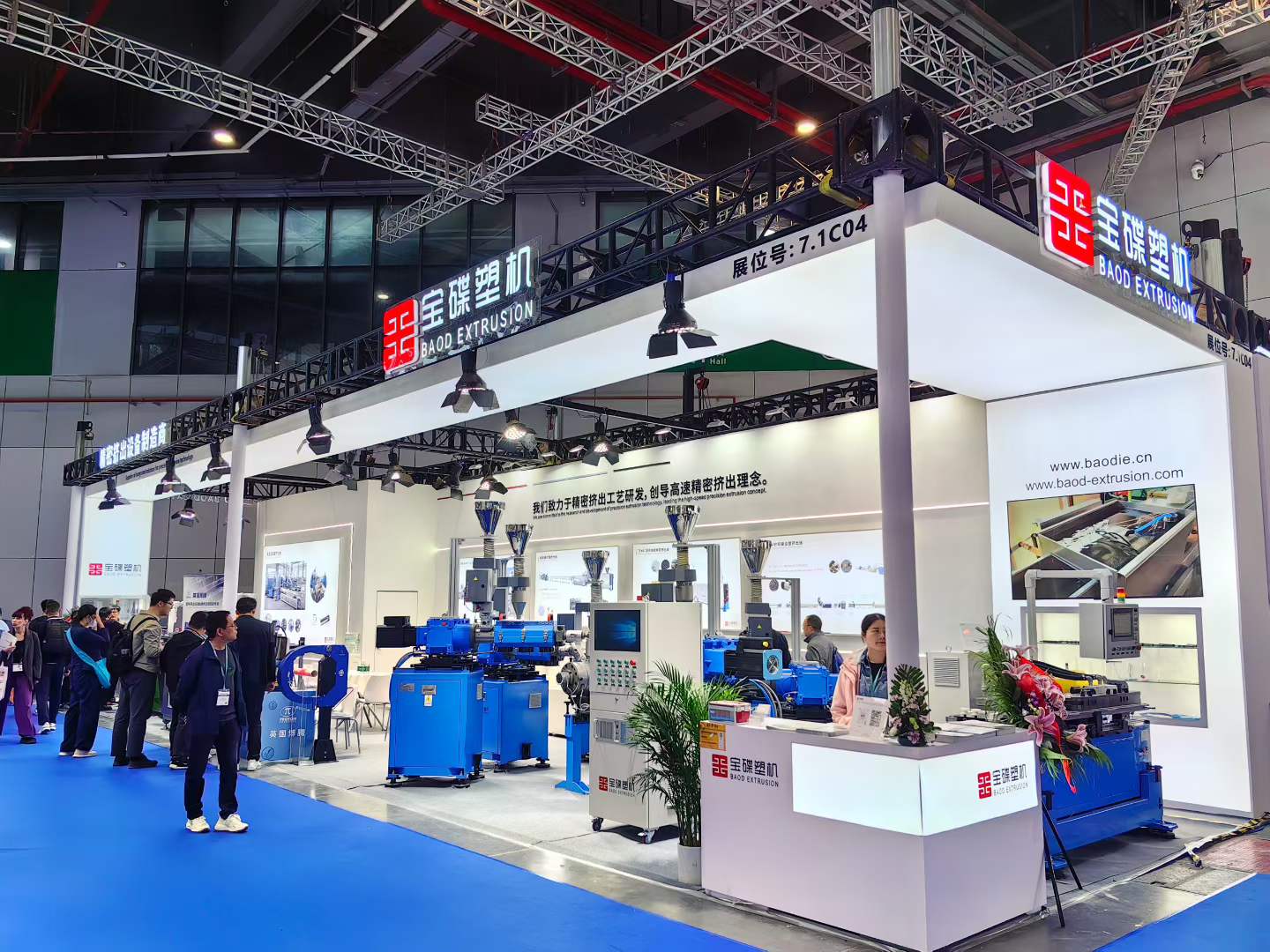
From April 21–24, CHINAPLAS 2026 was successfully held at the National Exhibition and Convention Center (Shanghai, Hongqiao). BAOD EXTRUSION showcased its latest R&D achievements at Booth 7.1C04, presenting "Smart Extrusion · High-Efficiency Innovation" solutions...
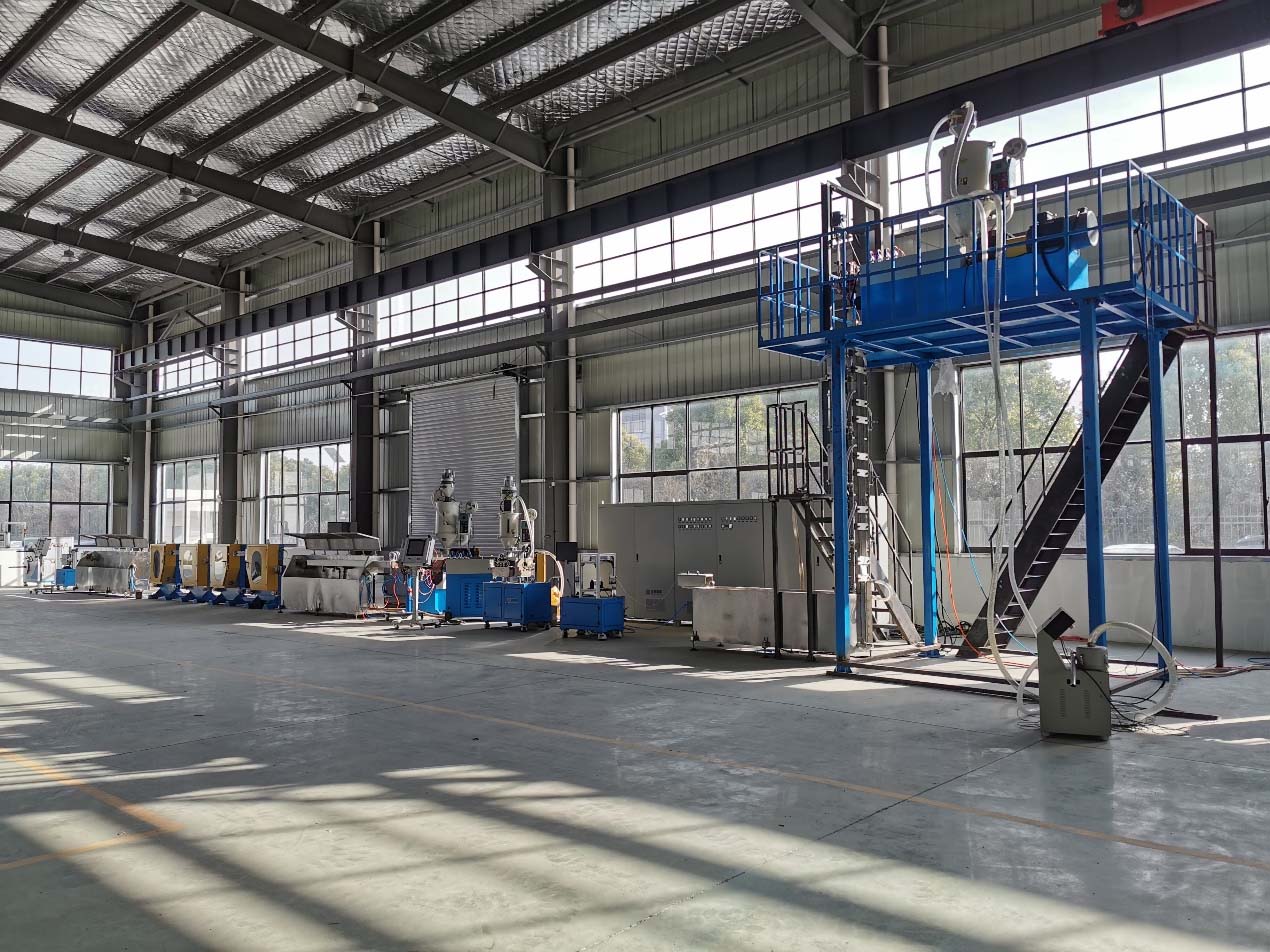
In the controlled environment of a modern industrial facility, a single, hair-thin plastic tube wound onto a reel might seem unremarkable. However, in sectors ranging from mining and quarrying to large-scale infrastructure demolition, this tube—known...
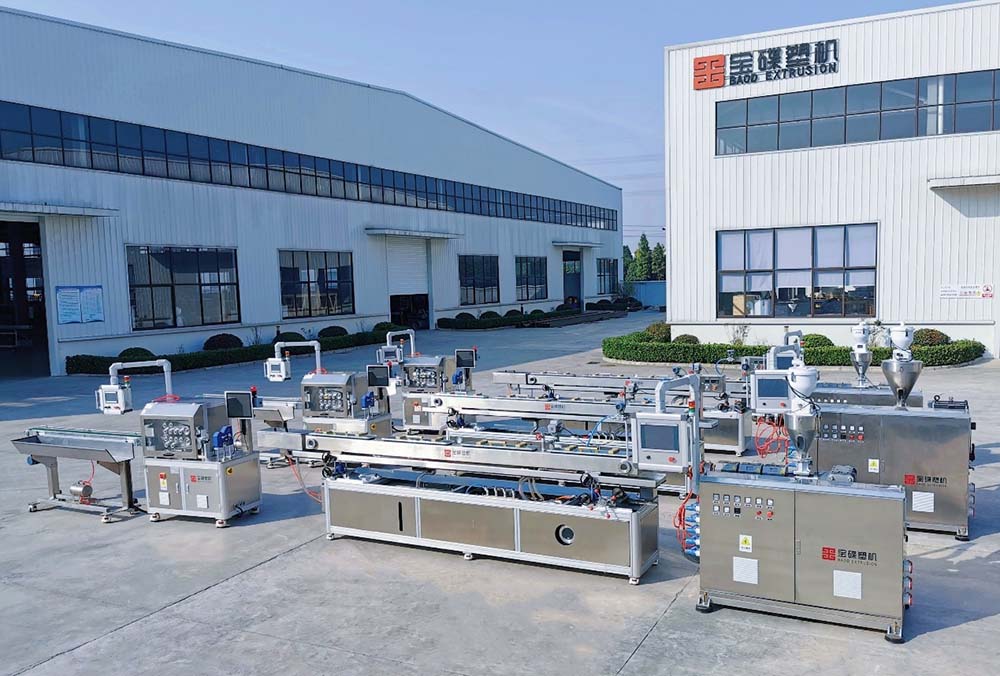
In the sterile, quiet environment of a modern medical facility, a clinician prepares a complex catheter. This thin, flexible tube is far more than a simple conduit; internally, it is divided into several microscopic channels, or lumens, each designed...
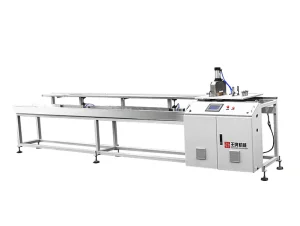
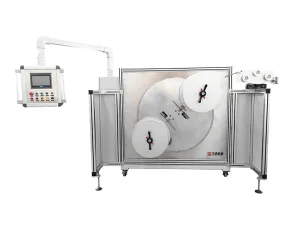
Essential modular units designed to configure, pull, cut, and coil extruded products under precision control parameters.
 Baodie