The Tube Extrusion Line is a vital component in modern manufacturing. It transforms raw materials into precise tubular shapes. Understanding its functionality can greatly enhance production efficiency. This machinery utilizes heat and pressure to shape polymers into tubes used in various industries.
The process begins with feeding raw plastic pellets into the extruder. These pellets are heated and melted, then forced through a die. This step is crucial for achieving the desired dimensions. The quality of the extruded tube relies on several factors, including temperature control and material selection.
While the Tube Extrusion Line is advanced, it is not without challenges. Adjusting parameters can affect output quality. Manufacturers must continuously monitor performance to minimize waste. Despite its complexities, mastering this technology can lead to significant improvements in product consistency and production rates.
What is Tube Extrusion Line?
A tube extrusion line is a manufacturing system used to create tubular shapes from plastic materials. The process involves heating a plastic polymer until it becomes pliable. The softened material is then forced through a die to form a continuous tube. Once extruded, the tube can be cooled and cut to specific lengths. This whole process emphasizes precision and consistency in production.
Utilizing a tube extrusion line offers various advantages. The system can produce high volumes of tubes quickly and efficiently. Operators should focus on maintaining optimal temperature control for the best results. Regular equipment maintenance is vital. It's common to overlook routine checks on the extrusion die, which can lead to defects.
Tips: Always monitor the flow rate during production. A consistent flow helps maintain tube quality. Experiment with different materials for various applications, as the right polymer can enhance durability and flexibility. Remember, every mistake provides a learning opportunity for future projects.
Overview of Tube Extrusion Process
The tube extrusion process is a critical manufacturing technique used to create a variety of plastic tubes. This method involves forcing plastic material through a die, forming a continuous tube. The extrusion line comprises several key components, including an extruder, a die, and cooling systems. Typically, this process uses materials like polyethylene or PVC, which are renowned for their versatility.
During extrusion, the plastic pellets are fed into the extruder, where they are melted and shaped. The temperature and pressure remain crucial throughout. According to industry reports, the global market for plastic extrusion is projected to reach USD 46.7 billion by 2026, highlighting its growing significance. Despite advancements, some challenges persist. Frequently, ensuring consistent thickness and preventing defects remain concerns for manufacturers.
Cooling is another essential step in tube extrusion. It solidifies the shape but can lead to warping if not managed properly. Maintaining optimal cooling times is vital for product integrity. Innovations in technology seek to address these issues, yet achieving perfection in extrusion remains complex. Continuous monitoring and adjustment are necessary to meet industry standards and customer expectations while avoiding common pitfalls.
Key Components of a Tube Extrusion Line
A tube extrusion line is a complex system that produces plastic tubes through the extrusion process. Understanding its key components is essential for anyone involved in manufacturing.
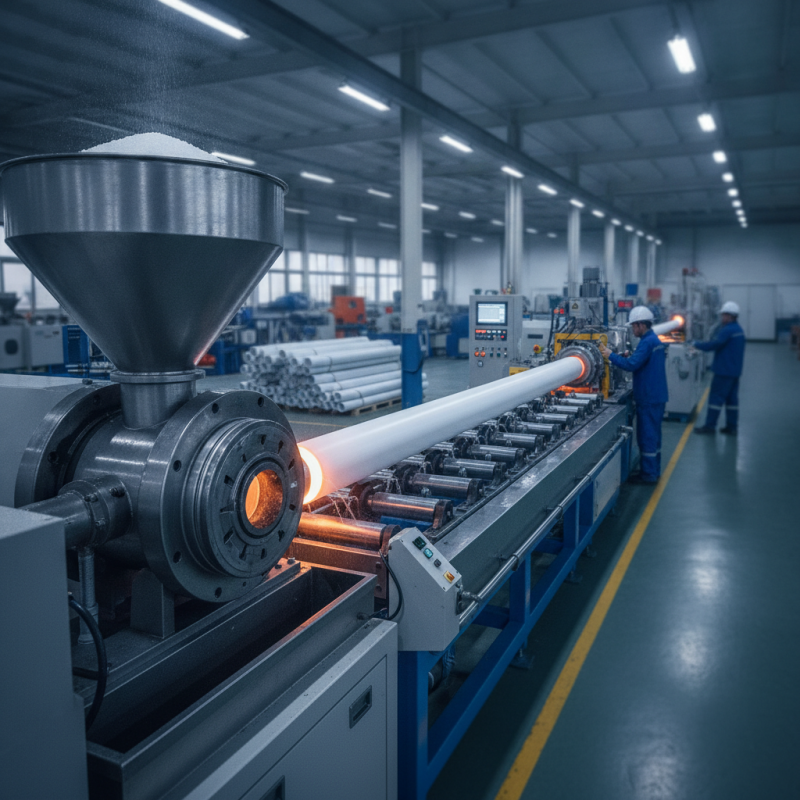
The line typically includes a feed hopper, extruder, die, cooling system, and cutting mechanism.
The feed hopper is where raw materials, usually in pellet form, are introduced. The extruder then melts these pellets and pushes the plastic through a specially designed die. The die shapes the molten plastic into a tube. Cooling systems play a vital role in solidifying the extruded tube. Water baths or air cooling units are common options.
Finally, the cutting mechanism trims the tubes to the desired length. Each component must work in harmony to ensure efficient production. However, issues can arise during operation. For example, improper cooling may lead to deformation.
Users must regularly check each part for wear or malfunction to maintain quality. Over time, even small inconsistencies can lead to significant production challenges.
Working Mechanism of Tube Extrusion
The tube extrusion process is a fascinating method utilized to create various plastic tubes. It begins with raw plastic material, which is fed into a hopper. The material is then heated in a barrel until it melts into a viscous state.
This mixture is forced through a die to shape it into a tube. Precision is key, as slight variations can affect the final product's quality.
The working mechanism relies on consistent temperature control and pressure. The extruder uses a screw that pushes the melted plastic through the barrel. This action not only melts the plastic but also mixes it, ensuring uniform consistency. The die shapes the plastic as it exits. When cooled, the tube maintains its shape, allowing for various applications.
Challenges can arise during the extrusion process. Uneven heating can cause defects in the material. Additionally, if the die clogs, production halts, leading to inefficiencies. Regular maintenance of equipment is essential to mitigate such issues. Continuous monitoring ensures that the extrusion line operates smoothly, maintaining high standards in production.
Applications and Benefits of Tube Extrusion
Tube extrusion is pivotal in various industries, such as
construction, automotive, and healthcare. This process allows manufacturers
to create consistent, durable tubes from materials like PVC, polyethylene, and nylon.
For example, in the construction sector, plastic tubes are essential for plumbing and electrical conduits.
Data indicates that the global tube extrusion market size reached
approximately $5.5 billion in 2021, highlighting its significance.
One key benefit of tube extrusion is the ability to produce customized solutions. Manufacturers can tweak dimensions
and shapes, meeting specific client needs. A report from MarketsandMarkets suggests that the demand for customized
tubes has risen by 15% annually. Furthermore, tube extrusion is energy-efficient
compared to traditional methods, contributing to lower production costs. However, while this process enhances productivity,
it also requires skilled operators for quality assurance, which can sometimes be
a challenge.
The versatility of tube extrusion allows for applications in various fields. In healthcare, tubes are vital for
medical devices and delivery systems. The reliability of these tubes is paramount. Nevertheless, the industry must
continually address issues such as equipment maintenance and material waste. Proper training can enhance operation
but remains an area for improvement in many facilities. These factors underline the complexities of tube extrusion
while showcasing its crucial role across industries.
FAQS
: A tube extrusion line is a system that creates plastic tubes from raw materials. It heats plastic until pliable.
Raw plastic is melted in a barrel and forced through a die to create a tube shape. Precision is crucial.
The main components include a feed hopper, extruder, die, cooling system, and cutting mechanism. Each part is vital.
Consistent temperature ensures that the plastic material melts evenly, affecting the final tube's quality and strength.
Issues like uneven heating or die clogging can lead to defects or halt production. Regular checks help prevent this.
Regular maintenance is essential. Neglecting routine checks can lead to significant production challenges over time.
Yes, experimenting with various materials can enhance tube durability and flexibility for different applications.
If cooling is improper, it may cause deformation in the extruded tubes. This can compromise product quality.
Monitoring the flow rate is critical. A consistent flow maintains quality and reduces the likelihood of defects.
The cutting mechanism trims extruded tubes to specified lengths. Proper alignment is essential for accuracy.
Conclusion
The Tube Extrusion Line is an advanced manufacturing system designed for the continuous production of plastic tubes through a process known as extrusion. This process involves heating raw materials to a molten state and then forcing them through a mold to create uniform tube shapes. The key components of a Tube Extrusion Line include the extruder, which melts and shapes the material, cooling systems to solidify the tubes, and cutting mechanisms for sizing.
The working mechanism of the Tube Extrusion Line is straightforward yet efficient, involving the preparation of raw materials, the extrusion process, cooling, and cutting to desired lengths. Tube extrusion is utilized across various industries, including packaging, automotive, and construction, owing to its ability to produce high-quality tubes with consistent dimensions. The benefits of tube extrusion include increased production efficiency, reduced material waste, and the flexibility to create customized tube designs. Overall, the Tube Extrusion Line plays a critical role in modern manufacturing processes.

 Baodie