
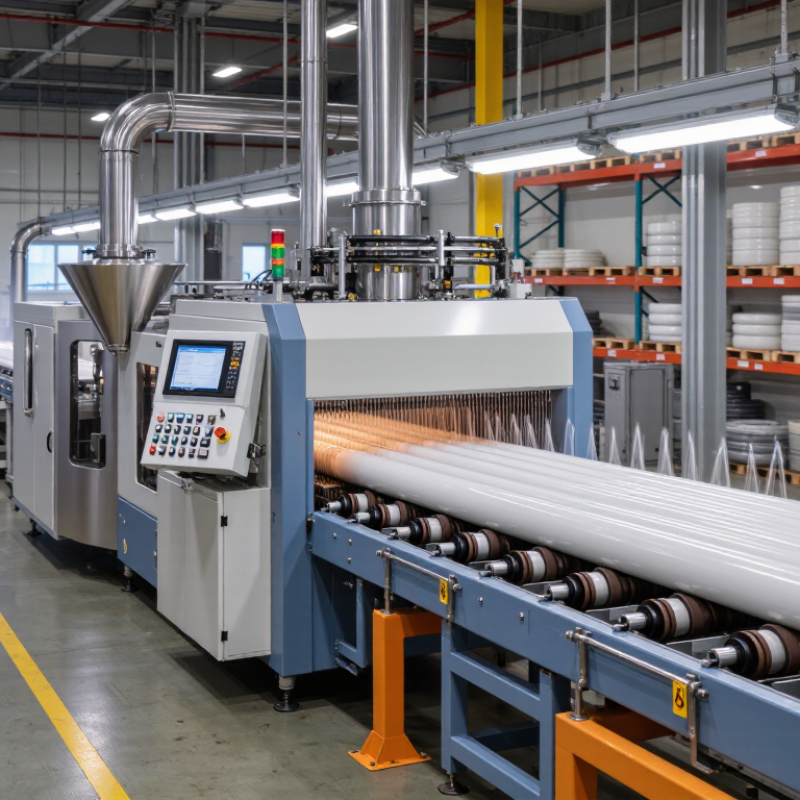
Top 10 PVC Pipe Extrusion Machine Manufacturers

Time:2026-10-27 Author:Charlotte
0%

Choosing from the Top 10 PVC Pipe Extrusion Machine Manufacturers requires more than comparing prices or catalog images. A Pvc Pipe Extrusion Machine must deliver consistent output, accurate wall thickness, and stable production over long shifts. In practical factories, small details matter. A vibrating haul-off can create rejected pipe. Poor cooling control can distort dimensions. Weak technical support can stop an entire line.

This guide evaluates leading manufacturers through practical and verifiable criteria. These include extrusion capacity, screw design, energy efficiency, automation, component quality, and after-sales service. We also consider installation guidance, spare-parts availability, training, and documented customer experience. Real machines should be judged beside real production requirements. A supplier serving irrigation pipe may not suit high-pressure plumbing applications. The best option depends on resin type, pipe diameter, output targets, and local operating conditions.

No ranking is perfect. Public information can be incomplete, and factory performance may vary between projects. That limitation deserves attention. We therefore encourage buyers to request production samples, factory references, test reports, and clear warranty terms. A reliable manufacturer should explain maintenance schedules, safety features, and compliance documentation without vague promises. Energy use should also be reviewed carefully, because lower purchase costs may become higher operating costs later.

The following selection offers a practical starting point for engineers, distributors, and procurement teams. It highlights manufacturers with relevant experience, technical capability, and stronger evidence of reliability. Use it to ask better questions before investing. Performance matters most.

Top 10 PVC Pipe Extrusion Machine Manufacturers

What Is a PVC Pipe Extrusion Machine?

A PVC pipe extrusion machine converts rigid PVC powder or pellets into continuous pipes. Its main sections include a feeder, heated barrel, screw, die, sizing unit, cooling tank, haul-off, and cutting system. The screw melts and mixes the material before pushing it through a circular die. Vacuum sizing then fixes the pipe’s diameter and wall thickness. Water cooling hardens the shape.

According to PlasticsEurope’s Plastics—The Fast Facts 2023, global plastics production reached 400.3 million tonnes in 2022. This volume reflects the scale of processing equipment required worldwide. PVC pipe lines must control temperature, screw speed, vacuum pressure, and cooling time with precision. Small changes can create oval pipes, rough surfaces, or uneven walls. In practical operation, experienced technicians often adjust settings gradually. A perfect setting rarely exists. Material moisture, formulation, and ambient temperature can still change results.

Tips: Check die alignment before production. Measure wall thickness at several points. Keep cooling water clean and stable. The ISO 9969 standard uses ring stiffness testing for thermoplastics pipes, while ISO 9080 helps evaluate long-term hydrostatic strength. These standards support more reliable quality decisions. However, testing only one sample is weak practice. Record production data continuously, and review failed pieces honestly. Sometimes the machine is not the problem; poor material preparation is.

How to Evaluate PVC Pipe Extrusion Machine Manufacturers

When evaluating PVC pipe extrusion machine manufacturers, examine evidence rather than polished sales language. Ask for complete specifications, including output range, screw diameter, motor power, temperature control, and cooling capacity. The machine should match your resin formula, pipe diameter, wall thickness, and planned production speed. A supplier with practical experience will explain these limits clearly.

Request sample pipes produced under conditions similar to yours. Check surface smoothness, ovality, wall thickness, and weight consistency. Ask whether the manufacturer can perform a factory trial using your material. Short trials reveal problems that brochures often hide. It is also useful to inspect assembly details, electrical cabinets, heaters, and gearbox access. Clean wiring and accessible maintenance points usually indicate disciplined engineering.

Review installation records, operator training, spare-parts availability, and response times for technical support. Speak with several existing customers, preferably from similar production environments. Do not rely on one impressive reference. A professional manufacturer should provide drawings, manuals, inspection records, and clear warranty terms. I have seen buyers focus too heavily on purchase price and overlook energy use or downtime costs. That mistake can become expensive. Compare the total operating cost over several years, not only the initial quotation. Evaluate testing methods, safety documentation, delivery control, and the manufacturer’s willingness to discuss weaknesses openly. Excuses during evaluation rarely improve after installation.

Top 10 PVC Pipe Extrusion Machine Manufacturers

Choosing among the top 10 PVC pipe extrusion machine manufacturers requires more than comparing catalogue prices. Experienced buyers inspect output stability, screw design, heating control, and service response. A reliable manufacturer should provide measured production data, material guidance, and clear maintenance procedures. Look for machines that maintain wall thickness during long production runs. Ask for sample pipes before signing. This simple test often reveals cooling weaknesses.

Professional evaluation also includes energy use, tooling accuracy, automation, and operator safety. A strong supplier explains how its extruder handles different PVC formulations without vague promises. Factory audits can show assembly quality, inspection records, and spare-part organization. References from comparable pipe producers add useful evidence, although one reference cannot prove everything. I would question unusually high speed claims. Real output depends on pipe diameter, formulation, cooling length, and acceptable tolerances. Some comparisons fail because they ignore these details.

Tips: Request a live trial with your own material. Record output, power consumption, surface finish, and scrap rate. Check whether technicians can respond in your language and time zone. Review warranty exclusions carefully. Keep a written acceptance standard.

Top 10 PVC Pipe Extrusion Machine Manufacturers - Top 10 PVC Pipe Extrusion Machine Manufacturers

Rank Anonymous Manufacturer Primary Machine Type Typical Pipe Diameter Range Typical Output Range Extruder Configuration PVC Applications Automation Level
1 Manufacturer 01 High-speed rigid PVC pipe line 16–630 mm 80–1,000 kg/h Conical twin-screw Pressure, drainage and conduit pipe Fully automatic
2 Manufacturer 02 Large-diameter PVC extrusion line 315–1,000 mm 350–1,200 kg/h Parallel or conical twin-screw Sewer, water and industrial pipe Fully automatic
3 Manufacturer 03 Dual-strand PVC pipe line 20–160 mm 120–450 kg/h Conical twin-screw Electrical conduit and plumbing pipe Semi-automatic to automatic
4 Manufacturer 04 High-output PVC conduit line 16–110 mm 100–350 kg/h Conical twin-screw Electrical and telecommunications conduit Automatic
5 Manufacturer 05 Flexible and rigid PVC profile line 12–250 mm 60–300 kg/h Single or twin-screw Small-diameter pipe and technical profiles Semi-automatic
6 Manufacturer 06 Four-cavity PVC pipe line 16–63 mm 180–500 kg/h Conical twin-screw Mass-production conduit and water pipe Fully automatic
7 Manufacturer 07 Low-energy PVC pipe extrusion line 20–400 mm 90–650 kg/h Energy-efficient twin-screw Drainage, irrigation and utility pipe Automatic
8 Manufacturer 08 Recycled-material PVC pipe line 50–500 mm 150–700 kg/h High-torque twin-screw Non-pressure and drainage pipe Semi-automatic to automatic
9 Manufacturer 09 Compact PVC pipe extrusion line 16–160 mm 50–250 kg/h Conical twin-screw Small-scale plumbing and conduit pipe Semi-automatic
10 Manufacturer 10 Custom PVC pipe production line 20–800 mm 80–900 kg/h Configurable twin-screw Custom industrial, water and drainage applications Configured to order

Note: Output, diameter and automation figures are representative ranges for commercially available PVC pipe extrusion systems. Actual performance depends on resin formulation, pipe standard, wall thickness, tooling, cooling capacity and operating conditions.

Key Technologies Used by Leading Manufacturers

Top 10 PVC Pipe Extrusion Machine Manufacturers

Key Technologies Used by Leading Manufacturers

Modern PVC pipe extrusion machines depend on controlled material flow, stable temperature, and accurate sizing. Conical twin-screw extruders are common because they mix additives evenly and reduce thermal stress. Some manufacturers also use gravimetric dosing systems. These systems measure powder continuously, rather than relying on rough volume estimates.

Vacuum calibration tanks shape the hot pipe against a sizing sleeve. Multi-zone cooling then prevents warping during production. Servo-driven haul-off units maintain steady pulling speed, even when wall thickness changes slightly. Laser diameter gauges inspect the pipe without contact. A PLC records pressure, temperature, speed, and fault signals. This data helps technicians identify problems before rejected pipe fills the floor.

Tips: Check the complete line during a real production trial. Ask for test results using your intended PVC formulation. A machine may perform well with one recipe and struggle with another. Keep cooling water clean and stable. Small temperature changes can create visible ovality. In my experience, operators often trust automatic settings too quickly. Manual observation still matters. Listen for unusual vibration, watch the melt surface, and inspect the first meters of pipe. No system is perfect. Calibration drift, worn screws, and inconsistent filler can still reduce accuracy. Reliable manufacturers support preventive maintenance, operator training, and practical spare-parts planning. These details often matter more than impressive specifications.

Key Technologies Used by Leading PVC Pipe Extrusion Machine Manufacturers

Industry benchmark showing the typical adoption rate of major technologies among leading PVC pipe extrusion machine manufacturers. The figures represent the share of manufacturers offering or integrating each capability in current machine platforms.

Data dimensions: technology capability and estimated adoption rate among leading manufacturers. Values are presented as industry benchmark percentages rather than company-specific data.

How to Choose the Right Manufacturer for Your Needs

Top 10 PVC Pipe Extrusion Machine Manufacturers: How to Choose the Right Manufacturer for Your Needs

Choosing a PVC pipe extrusion machine manufacturer requires more than comparing prices. Grand View Research valued the global plastic extrusion machine market at approximately USD 8.1 billion in 2023. Its growth reflects stronger demand for efficient, automated production. Ask manufacturers for verified output data, melt-temperature stability, energy consumption, and service records. A reliable supplier should explain how its extruder handles different PVC formulations, pipe diameters, wall thicknesses, and production speeds. Real factory trials matter. Brochures can look impressive.

Check engineering depth and compliance. Request references from factories producing similar pipes, not unrelated plastic products. Review screw design, barrel heating zones, calibration systems, haul-off accuracy, and online inspection options. ISO 9001 certification can support quality control, but certification alone does not guarantee machine performance. The manufacturer should provide drawings, installation guidance, operator training, spare-parts availability, and realistic response times. The Plastics Industry Association reports that energy efficiency remains a major operational concern, so compare power use per kilogram, not only motor size.

Tips: Test your actual PVC compound before signing. Measure output, ovality, surface finish, noise, and scrap rate. Demand a written acceptance standard. Ask who pays when targets are missed. Avoid selecting the cheapest quotation without calculating maintenance and downtime. A machine may run well during a short demonstration, then struggle during continuous production. Leave room for doubt. Your checklist should include future pipe sizes, local technical support, software updates, and worker safety. Credible manufacturers welcome difficult questions.

FAQS

What specifications should buyers request from a PVC pipe extrusion machine manufacturer?

Request output range, screw diameter, motor power, temperature controls, and cooling capacity. The machine must suit your PVC formula, pipe diameter, wall thickness, and target speed. Vague specifications are not enough.

Why is a factory production trial important?

A trial can reveal problems hidden by brochures. Use your intended PVC material and similar production settings. Check surface smoothness, ovality, wall thickness, and weight consistency. One short trial may not show every weakness.

Which machine technologies support stable PVC pipe production?

Conical twin-screw extruders can mix additives evenly and reduce thermal stress. Gravimetric dosing systems measure powder continuously. Vacuum calibration tanks help shape hot pipe accurately. Multi-zone cooling reduces warping during production.

How can buyers inspect machine construction quality?

Examine electrical cabinets, heaters, gearboxes, wiring, and maintenance access. Clean wiring suggests disciplined assembly. Accessible service points can reduce repair time. Look closely, not just at painted surfaces.

What quality checks should be included during production?

Check pipe diameter, wall thickness, ovality, surface finish, and weight. Laser gauges inspect dimensions without touching the pipe. A control system can record pressure, temperature, speed, and fault signals. Manual observation still matters.

How should technical support and training be evaluated?

Request installation records, operator training plans, manuals, drawings, and inspection reports. Ask about spare parts and technical response times. Speak with several customers in similar production environments. One impressive reference proves little.

How should the total cost of a machine be compared?

Compare energy use, maintenance, spare parts, downtime, and expected output. The lowest quotation may create higher operating costs later. A few lost production days can become expensive. I would not judge price alone.

What problems can reduce extrusion accuracy after installation?

Calibration drift, worn screws, unstable cooling water, and inconsistent filler can affect accuracy. Small temperature changes may create visible ovality. Operators should inspect the first pipe meters and listen for vibration. Automatic settings are helpful, but not perfect.

Conclusion

A Pvc Pipe Extrusion Machine is a specialized production system that converts PVC resin and additives into continuous pipes with controlled dimensions, strength, and surface quality. This article explains how the extrusion process works, including material feeding, heating, melting, shaping, cooling, sizing, and cutting. It also outlines the main factors for evaluating manufacturers, such as machine stability, output capacity, energy efficiency, component quality, customization options, technical support, and after-sales service.

The guide introduces ten leading types of manufacturers in the industry without focusing on specific brand names, helping readers understand how suppliers may differ in experience, product range, automation, and application expertise. It also reviews key technologies, including advanced screw designs, precise temperature control, vacuum calibration, efficient cooling systems, intelligent monitoring, and automated production management. Finally, readers will learn how to select the right manufacturer by matching machine specifications, investment plans, production goals, material requirements, factory conditions, and long-term maintenance expectations.

Charlotte

Charlotte

Charlotte is a seasoned marketing professional with a deep understanding of the company's portfolio and a passion for elevating its presence in the market. With a keen eye for detail and a commitment to excellence, she ensures that our professional blog is regularly updated with insightful articles......