Choosing among Top Automotive Tube Extrusion Line Manufacturers requires more than comparing machine prices. Automotive tubing must survive vibration, heat, pressure, and repeated bending. A reliable line should produce consistent wall thickness, accurate diameter, clean surfaces, and stable mechanical performance.
Dr. Wolfgang Michaeli, a respected extrusion technology specialist, has emphasized, “Stable output begins with controlled process conditions, not with machine speed.” This principle matters when evaluating an Automative Tube Extrusion Line. Experienced buyers inspect the complete process, including the extruder, die system, cooling section, haul-off, cutter, and online measurement equipment. A polished machine frame means little if temperature control fluctuates during a long production run.
Look closely.
Manufacturers with practical automotive experience should explain how their lines handle materials such as PA, TPU, PP, and multilayer compounds. They should also provide trial data, thickness charts, energy figures, and documented service procedures. Factory acceptance testing can reveal problems before installation. It is an unglamorous step, but often decisive.
The strongest suppliers usually demonstrate repeatable production rather than impressive brochures. Their engineers can discuss melt temperature, screw design, die centering, calibration, and scrap reduction in specific terms. They should also offer operator training and accessible replacement parts.
Some rankings may still be imperfect. Supplier performance can change by region, project size, and support team. Therefore, this guide examines manufacturers through evidence, field experience, technical capability, and customer reliability. The goal is practical clarity, not a perfect list. собеседникაღმდეგ
Automotive tube extrusion begins with the material, not the machine. PA is common in pneumatic lines, fuel systems, and protective conduits. It offers chemical resistance and stable dimensional control. TPU suits flexible air hoses, cable protection, and vibration-prone routes. Its softness improves bending, but heat and moisture require careful drying. That step is easy to underestimate.
Aluminum extrusion supports lightweight coolant pipes and structural passages. It reduces mass, yet thin walls can deform during calibration. Steel remains valuable for high-pressure, high-temperature, and impact-sensitive applications. It provides strength, but demands more energy and stronger downstream equipment.
OICA reported 93.5 million motor vehicles produced worldwide in 2023. The IEA recorded almost 14 million electric car sales in the same year. These figures increase demand for battery cooling, thermal management, and protected electrical routing.
Tips: Match screw design, die geometry, cooling length, and puller speed to each polymer or metal. Measure ovality, wall thickness, surface defects, and burst performance online when possible. PA often needs controlled pre-drying. TPU needs stable melt temperature. Aluminum needs precise billet heating. Steel needs reliable weld and coating control. A practical mistake is choosing output speed before confirming material behavior. That assumption is often wrong. Reports from the IEA and OICA show market growth, but they do not replace line trials, testing, and process records.
When comparing top automotive tube extrusion line manufacturers, start with measurable production evidence, not showroom claims. Output should be checked in kilograms per hour and usable tube length per shift. Ask for results using your resin, profile, wall thickness, and tooling conditions. A high headline output may hide frequent stops or unstable feeding.
Line speed matters only when quality remains steady. During a factory trial, record speed changes, melt temperature, cooling performance, and operator adjustments. A useful test should run for several hours, not just produce a short sample. No line is perfect. However, repeated speed loss may reveal weak temperature control or poor haul-off synchronization.
OD tolerance shows process discipline. Measure outer diameter at multiple points along each tube, using calibrated gauges and a documented sampling plan. Watch for ovality after cooling. Scrap rate should include start-up waste, changeover waste, rejected dimensions, and material purging. Request production records, maintenance logs, and a clear calculation method. A line reporting 1% scrap may exclude difficult transitions. That detail matters. Experienced engineers should explain why defects occur, how quickly they are corrected, and which settings prevent recurrence. A supplier’s technical confidence is useful, but verified data is stronger. Evaluate the entire process, not one impressive number.
Anonymous benchmark comparison of typical automotive tube extrusion line performance by output, line speed, outside-diameter tolerance, and scrap rate.
The benchmark uses representative production values for automotive-grade thermoplastic tube extrusion. Higher output and line speed indicate greater productivity, while lower OD tolerance and scrap rate indicate better process control. Actual results vary with polymer type, tube diameter, wall thickness, tooling, cooling, and inspection conditions.
Leading automotive tube extrusion line manufacturers distinguish themselves through measurable engineering, not polished brochures. Their systems control melt temperature, die centering, cooling, pulling speed, and wall thickness. Inline laser gauges can detect diameter changes within seconds. Experienced suppliers also understand material behavior, including polyamide moisture sensitivity and uneven thermal shrinkage. Small details matter.
A credible manufacturer profile should explain its IATF 16949 quality system clearly. Certification alone is not enough. Ask how the supplier manages traceability, process audits, calibration, nonconforming material, and corrective actions. Production records should connect resin batches, machine settings, inspection results, and operator approvals. During factory visits, practical evidence matters more than impressive presentations. No supplier is perfect. Honest limitations often indicate stronger reliability.
Tips: Request sample tubes, cycle-time data, and a complete acceptance checklist. Confirm whether FAT and SAT support is included. Check spare-part availability across your operating region. Ask for remote diagnostics, multilingual manuals, and response times outside office hours. Global service should include trained local technicians, not only video calls. Also review change-control procedures. A minor software update can affect tension, ovality, or scrap rates. Test the line with your actual material and tooling conditions before making a final decision.
| Manufacturer Profile | Core Extrusion Technology | Typical Automotive Tube Materials | Product and Process Capability | Quality-System Expectations | Inline Process Control | Automation and Traceability | Global Service Model | Best-Fit Application | Overall Evaluation |
|---|---|---|---|---|---|---|---|---|---|
| Profile A: Integrated Automotive Specialist | Single-screw extrusion lines with vacuum calibration, water cooling, haul-off, precision cutting, and automatic coiling or stacking. | Polyamide, polyethylene, polypropylene, thermoplastic elastomers, and other automotive-grade thermoplastics. | Suitable for fluid, air, fuel-system, wiring-protection, and underbody tube production. Supports multilayer construction when barrier, flexibility, or chemical-resistance requirements demand it. | IATF 16949 should be confirmed through a current certificate, certificate scope, issuing body, and expiration date. ISO 9001 certification is commonly used as a supporting quality framework. | Diameter, wall thickness, ovality, line speed, melt temperature, vacuum level, and cooling-water temperature can be monitored through sensors and a PLC-based control system. | Recipe management, alarm history, batch identification, barcode or QR-code integration, and production-data export are commonly available on advanced systems. | Application engineering, commissioning, operator training, preventive-maintenance schedules, remote diagnostics, and regional spare-parts support. | High-volume programs requiring stable dimensions, documented process capability, and integration with automotive supplier quality systems. | ★★★★★ Strongest fit for demanding automotive programs |
| Profile B: High-Precision Tube-Line Builder | Precision extrusion with closed-loop sizing, multi-zone temperature control, laser or optical measurement, and servo-controlled downstream equipment. | Engineering thermoplastics, flexible compounds, multilayer constructions, and selected high-temperature polymers, subject to screw, die, and cooling-system design. | Emphasizes tight dimensional tolerances, repeatable wall thickness, low ovality, controlled surface finish, and stable production at higher line speeds. | IATF 16949 certification is a valuable qualification criterion but must be verified independently. Audit support, control plans, inspection records, and nonconformance procedures should be reviewed. | Non-contact diameter measurement, automatic feedback to the haul-off or extruder, pressure monitoring, and statistical process-control data collection. | Recipe locking, user-access levels, trend charts, electronic production records, and interfaces for manufacturing execution systems may be included. | Factory acceptance testing, site acceptance testing, remote support, on-site service, spare-component recommendations, and process optimization after installation. | Safety-critical or tolerance-sensitive tubes where dimensional consistency and process data are more important than the lowest initial purchase price. | ★★★★★ Strongest fit for precision-focused production |
| Profile C: Modular and Flexible Line Supplier | Modular single-layer and co-extrusion platforms with interchangeable dies, configurable cooling sections, and scalable downstream units. | Polyolefins, polyamide compounds, elastomeric materials, recycled content blends, and other materials validated for the intended automotive application. | Offers flexible line configuration for different diameters, material formulations, cut lengths, coiling formats, and production volumes. | Quality-system credentials should be assessed at both the equipment builder and end-user production site. IATF 16949 applies to automotive manufacturing organizations and does not automatically certify every machine supplier. | Digital temperature control, basic diameter monitoring, vacuum and cooling regulation, length control, and optional vision inspection. | PLC and HMI control, recipe storage, production counters, fault logging, and optional data connectivity for plant-level systems. | Remote troubleshooting, modular replacement parts, installation supervision, technical documentation, and training for local maintenance teams. | Manufacturers needing one platform for several tube families, frequent product changeovers, or gradual capacity expansion. | ★★★★☆ Strongest fit for product variety and expansion |
| Profile D: Cost-Optimized Standard-Line Supplier | Conventional single-screw extrusion, water-bath cooling, standard haul-off, mechanical or servo cutting, and manual or semi-automatic collection. | Common thermoplastics such as polyethylene, polypropylene, and selected polyamide grades, depending on the screw and die package. | Appropriate for standard-dimension tubing, general fluid handling, protective conduits, and applications with moderate tolerance requirements. | Certification claims should be checked against current documents, defined scopes, and applicable manufacturing locations. Customer quality requirements may require additional audits and validation. | Standard temperature controllers, pressure gauges, manual sampling, basic diameter checks, and operator-adjusted process settings. | Basic PLC control, batch counters, operator recipes, and limited production-data storage; advanced traceability may require options. | Remote technical assistance, installation manuals, commissioning support, and replacement parts supplied from the manufacturing base or through regional distributors. | Cost-sensitive programs, pilot production, replacement capacity, and products with stable formulations and less demanding tolerances. | ★★★☆☆ Strongest fit for budget-controlled projects |
| Profile E: Turnkey Automation Partner | Complete line integration combining extrusion, calibration, cooling, puller, cutting or coiling, inspection, packaging, and plant-data connectivity. | Automotive-grade thermoplastics selected according to temperature, pressure, chemical, flexibility, emissions, and recyclability requirements. | Focuses on turnkey production cells, synchronized equipment, automatic changeover, integrated inspection, and reduced operator intervention. | IATF 16949 certification remains a site-specific qualification issue. A capable partner should support process documentation, measurement-system analysis, control plans, and customer audits. | Online dimensional measurement, vision inspection, defect marking, automatic rejection, closed-loop speed control, and centralized quality-data collection. | Industrial network communication, electronic batch records, user permissions, OEE monitoring, traceability from raw material to finished coil, and integration with MES or ERP systems. | Project management, layout planning, utilities review, installation, validation, training, cybersecurity updates, remote monitoring, and long-term service agreements. | Large automotive plants and tier suppliers seeking standardized, highly automated, data-rich production with limited manual handling. | ★★★★★ Strongest fit for turnkey and data-driven factories |
Note: IATF 16949 certification must be verified for the specific legal entity, manufacturing site, and certification scope. Equipment capability, tolerances, materials, and service coverage should be confirmed in the supplier's current technical proposal and factory acceptance documentation.
Top Automotive Tube Extrusion Line Manufacturers?
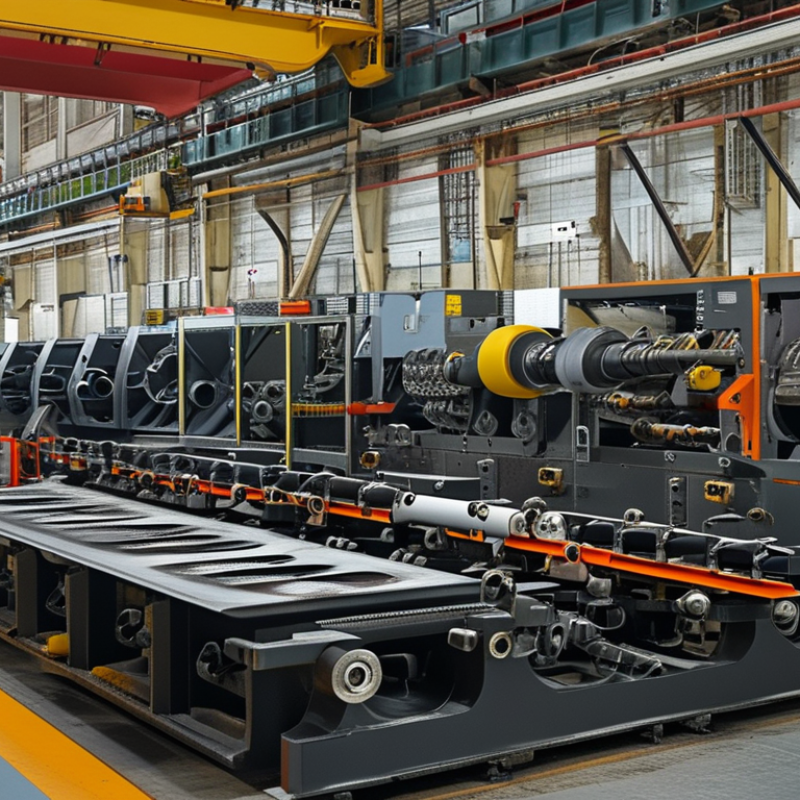
Automotive tube quality depends on the line, not only the resin. The die must maintain stable wall thickness around bends and multi-layer structures. A poorly centered die creates weak spots and scrap. Cooling tanks need steady water temperature and controlled flow. Uneven cooling can distort ovality before sizing is complete.
Haul-off units should provide constant traction without marking the tube surface. Servo-driven control helps maintain speed accuracy, especially with thin-wall tubing. Cutting systems must produce clean, burr-free ends. Automatic length checks reduce manual variation. According to PlasticsEurope’s Plastics—The Fast Facts 2024, global plastics production reached about 413.8 million tonnes in 2023. This scale highlights the importance of efficient processing and material control. Grand View Research also identifies continued growth in plastic extrusion, driven partly by transport applications. The data is useful, but market forecasts are not production guarantees.
Tips: Specify die centering tolerance, cooling temperature stability, haul-off speed deviation, and cutting repeatability. Ask for factory trial records. Inspect sample cross-sections, not only polished photographs. Inline laser gauges can track diameter and wall thickness continuously. ISO 20457 provides a useful framework for plastics machinery safety and performance discussions. Still, some suppliers report impressive numbers without defining test conditions. That gap deserves careful questions. QC should include ovality, tensile strength, dimensional drift, and visual defects. A simple dashboard helps operators react before a full coil becomes waste.
A reliable supplier should prove process control, not merely display a certificate. The ISO Survey reports over one million valid ISO 9001 certificates worldwide. Ask for the current certificate, scope, audit status, and corrective-action records. Request sample tubes from your resin, diameter range, and tolerance targets. Inspect ovality, wall thickness, surface finish, and scrap rates. Small gaps become expensive quickly.
Energy deserves measured evidence. The International Energy Agency estimates industry consumes about 37% of global final energy. Compare complete-line consumption in kWh per kilogram, including heaters, drives, cooling, and compressed air. Ask for data from a witnessed production trial. A lower purchase price can hide inefficient heaters or oversized motors. That is easy to miss.
Warranty language reveals engineering confidence. Check coverage for the extruder, dies, haul-off, control system, and heating zones. Confirm response times, spare-part availability, remote diagnostics, and on-site labor limits. Calculate ROI using saleable output, scrap, labor, energy, maintenance, and downtime. Use a three-year and seven-year model. The payback may look attractive on paper, but unstable demand can change it. I would also add a sensitivity test for 15% lower utilization. That uncomfortable scenario is often more realistic.
: Measure kilograms per hour and usable tube length per shift. Use your resin, profile, wall thickness, and tooling conditions. Ask for several-hour production results. Headline output can hide frequent stops.
Speed matters only when quality remains stable. Record melt temperature, cooling performance, and operator adjustments during trials. Repeated speed loss may indicate weak temperature control. It may also show poor haul-off synchronization. Short demonstrations can mislead.
Measure the outer diameter at several points along each tube. Use calibrated gauges and a documented sampling plan. Check ovality after cooling. Small dimensional gaps can become costly.
Include start-up waste, changeover waste, rejected dimensions, and material purging. Request production records and maintenance logs. Ask how the percentage was calculated. A reported one-percent rate may exclude difficult transitions. That detail matters.
Request a current quality certificate, its scope, and audit status. Ask for corrective-action records. Test sample tubes using your resin and diameter range. Inspect ovality, wall thickness, surface finish, and scrap rate. Certificates alone prove little.
Compare complete-line use in kilowatt-hours per kilogram. Include heaters, drives, cooling, and compressed air. Use data from a witnessed production trial. A cheaper line may contain inefficient heaters or oversized motors. Easy to miss.
Check coverage for the extruder, dies, haul-off, controls, and heating zones. Confirm response times and spare-part availability. Review remote diagnostics and on-site labor limits. Vague wording creates problems later. I would ask twice.
Calculate saleable output, scrap, labor, energy, maintenance, and downtime. Build three-year and seven-year models. Test the result with fifteen-percent lower utilization. Unstable demand can change the payback period. The optimistic model is not enough.
Choosing the right Automative Tube Extrusion Line requires a clear understanding of material requirements, production targets, and long-term operating costs. Automotive tubes may be produced from PA, TPU, aluminum, or steel, depending on the application, temperature resistance, flexibility, strength, and fluid compatibility required. Key evaluation metrics include hourly output, line speed, outside-diameter tolerance, dimensional stability, and scrap rate. A reliable manufacturer should demonstrate strong process engineering, modern automation, IATF 16949 quality management, and responsive global technical service.
A complete line should be assessed component by component, including die design, material feeding, cooling systems, haul-off units, cutting equipment, and in-line quality control. Buyers should also compare ISO 9001 certification, energy consumption, maintenance requirements, warranty coverage, spare-parts support, and expected return on investment. The best solution balances consistent tube quality with efficient production, flexible material handling, easy operation, and dependable service throughout the equipment’s working life.

Baodie