Choosing the right Pvc Profile Extrusion Machine can determine product quality, production stability, and long-term operating costs. PVC profiles may serve windows, doors, furniture, construction, or decorative applications. Each use demands different dimensions, surface finishes, and mechanical performance. A machine suitable for rigid window frames may not perform well with flexible sealing profiles.
Practical evaluation should begin with the material formula, profile size, expected output, and daily production schedule. Screw design matters because it controls melting, mixing, and material residence time. Stable temperature zones help prevent discoloration, bubbles, and uneven surfaces. Calibration tables, cooling systems, haul-off units, and cutting equipment also deserve close attention. Small details matter. A weak cooling system can ruin an otherwise capable line.
Experienced buyers should inspect sample profiles, not only machine brochures. Ask the supplier for production tests using a comparable PVC formulation. Check motor efficiency, control-system accuracy, spare-parts availability, and maintenance access. Technical documents, factory records, customer references, and recognized quality certifications can support a more reliable decision. However, no certificate replaces a realistic trial.
I have learned that the cheapest machine often becomes expensive through waste, downtime, and frequent adjustments. Still, premium equipment is not automatically the best choice. This judgment can be imperfect. Production goals change, operators make mistakes, and local service may be limited. A careful comparison should consider measurable performance, supplier expertise, operator training, and future expansion. The best Pvc Profile Extrusion Machine is the one that consistently produces acceptable profiles under your actual working conditions.
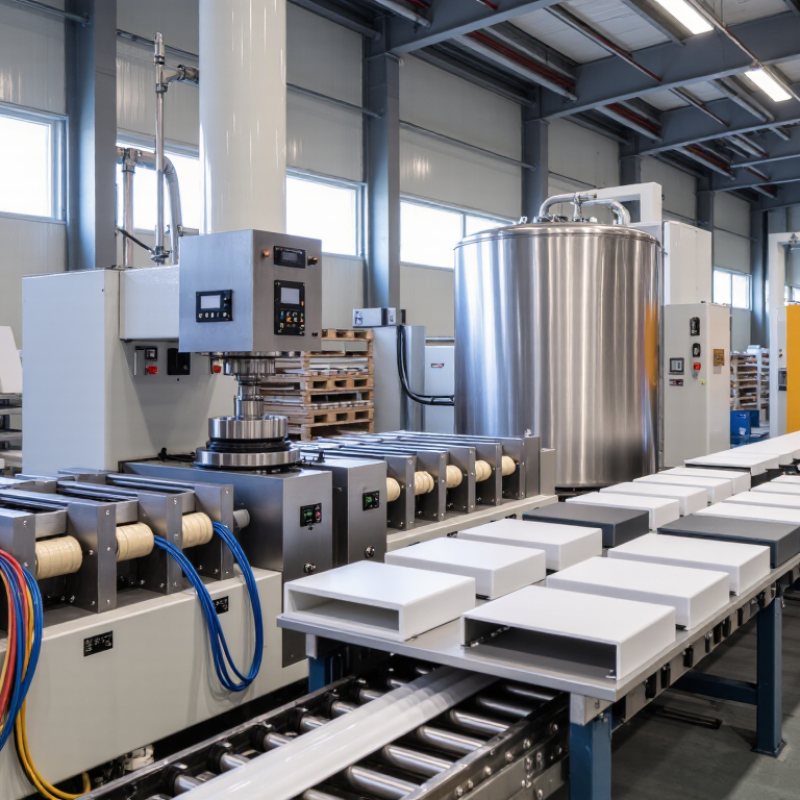
How to Choose the Best PVC Profile Extrusion Machine?
Understanding PVC profile extrusion requirements starts with the product, not the machine price. Define the profile’s width, wall thickness, length, surface finish, and dimensional tolerance. A window frame needs different control than a flexible sealing strip. Review the PVC formulation, additives, filler level, and expected production rate. These factors affect screw design, motor torque, heating zones, and die pressure. A machine with stable temperature control helps prevent warping, bubbles, and uneven color.
Tips: Test the actual compound before purchasing. Check melt pressure, cooling speed, haul-off stability, and cutting accuracy. Ask for sample profiles at your target speed. Measure them after cooling, not immediately. Small changes can become serious during continuous production.
Choose a line with suitable calibration, vacuum sizing, cooling, hauling, and cutting systems. The die must support the profile’s geometry without creating excessive pressure. Conical twin-screw extruders often suit rigid PVC, while other formulations may require different screw configurations. Confirm the control system records temperature, pressure, speed, and alarms. This supports traceability and easier troubleshooting. I have seen operators focus on output, then discover poor calibration caused most defects. Higher speed is not always better. In real production, a slower stable line may deliver less waste and more usable profiles. The “best” machine is not universal, and the first specification can still need revision after testing.
| Requirement Dimension | Typical Requirement or Range | Recommended Machine Configuration | Why It Matters |
|---|---|---|---|
| PVC Material Type | Rigid PVC, commonly used for window profiles, door profiles, skirting, cable ducts, and decorative sections | Conical twin-screw extruder for general rigid PVC processing; parallel twin-screw extruder for higher throughput or larger profiles | PVC is heat-sensitive and requires controlled melting, mixing, and residence time to reduce degradation. |
| Profile Cross-Section | Small profiles below 60 mm; medium profiles from 60–150 mm; large or hollow profiles above 150 mm | Match the die opening, calibrator, cooling table, haul-off width, and cutter capacity to the maximum profile dimensions. | An oversized or undersized downstream line can cause unstable sizing, poor cooling, and excessive material waste. |
| Target Output | Approximately 30–80 kg/h for small profiles; 80–180 kg/h for medium profiles; 180–400 kg/h for large profiles | Select extruder capacity with a practical operating load of about 70–85% of the maximum rated output. | Operating below the maximum rating improves process stability and leaves capacity for formulation and product changes. |
| Screw Diameter | Common rigid-PVC profile extruder sizes are approximately 45–65 mm for small lines, 65–92 mm for medium lines, and 92–120 mm for high-output lines | Choose screw diameter according to the required output, formulation, profile size, and available installation space. | Screw diameter directly affects plasticizing capacity, torque demand, output, and energy consumption. |
| Screw L/D Ratio | Typically about 20:1–28:1 for many rigid-PVC profile applications | Use the extruder manufacturer’s recommended screw design for the selected PVC formulation and output range. | The length-to-diameter ratio influences conveying, mixing, melting, and residence time. |
| Drive Power | Approximately 18.5–37 kW for small lines; 37–90 kW for medium lines; 90–160 kW for large lines | Size the motor and gearbox for continuous torque at the required screw speed, not only for peak output. | Insufficient drive capacity can cause overloads, while excessive capacity may increase purchase and operating costs. |
| Temperature Control | Multiple barrel zones, commonly controlled within a processing range of approximately 160–200°C, depending on formulation and shear | Use independent temperature zones, cooling capability, melt-pressure monitoring, and alarm protection. | PVC can degrade if exposed to excessive temperature or residence time, so stable thermal control is essential. |
| Die and Tooling | Profile-specific die with adjustable flow balancing and replaceable wear components | Specify the exact profile drawing, wall thickness, cavities, material grade, and dimensional tolerance before die design. | Die design controls melt distribution, wall uniformity, surface quality, and the amount of start-up scrap. |
| Calibration and Cooling | Vacuum calibration table with adjustable vacuum, water temperature control, and sufficient cooling length | Use a calibration system sized for profile geometry, line speed, wall thickness, and heat-removal requirements. | Consistent vacuum and cooling help maintain dimensions, straightness, surface finish, and cavity shape. |
| Haul-Off Speed | Common profile line speeds range from approximately 0.5–8 m/min, depending on profile size and wall thickness | Select a variable-speed caterpillar or belt haul-off with adjustable clamping pressure. | Stable pulling prevents deformation, surface marking, dimensional variation, and slippage. |
| Cutting or Sawing | Fixed-length cutting commonly ranges from about 0.5–6 m, with tolerances defined by the product specification | Use synchronized flying saw or cutter equipment with dust extraction and programmable length control. | Accurate cutting improves packing efficiency and reduces manual trimming and material loss. |
| Dimensional Tolerance | Often specified around ±0.2–0.5 mm for critical profile dimensions, depending on profile geometry and applicable standards | Prioritize precise die adjustment, stable vacuum calibration, controlled cooling, and closed-loop line-speed control. | Tighter tolerances require more consistent tooling and downstream control than standard decorative profiles. |
| Automation and Monitoring | Basic manual control for low-volume production; PLC and touchscreen control for repeatable industrial production | Consider recipe storage, temperature alarms, pressure monitoring, motor-load display, and production data logging. | Automation improves repeatability, shortens setup time, and helps identify process deviations early. |
| Energy and Utilities | Three-phase electrical supply, cooling water, compressed air, and ventilation requirements must be confirmed before installation | Evaluate motor efficiency, heater insulation, cooling-water circulation, and total installed power. | Utility capacity affects production continuity, operating cost, and the machine’s installation feasibility. |
| Quality and Safety | Emergency stops, guards, overload protection, temperature alarms, and safe access to rotating and hot components | Confirm conformity with applicable local machinery, electrical, and workplace safety requirements. | Safety systems protect operators and reduce downtime caused by preventable equipment failures. |
Note: The values shown are typical planning ranges for rigid PVC profile extrusion. Final machine specifications should be confirmed through material trials, profile drawings, target output, required tolerances, and the applicable product standards.
Define the profile width, wall thickness, length, surface finish, and dimensional tolerance. A window frame needs different control from a flexible sealing strip. Also review the PVC formulation, additives, filler level, and target output. The first specification may need revision.
Different formulations change mixing needs, melt pressure, heating requirements, and screw torque. Rigid, heat-sensitive PVC often requires controlled processing temperatures. Recycled content may also affect stability and surface quality. Test the actual compound.
A conical twin-screw extruder often suits rigid PVC applications. It can support controlled temperatures and strong material mixing. Parallel twin-screw systems may offer more flexibility for larger profiles. The formulation still decides.
Calculate output from profile weight, line speed, scrap rate, and operating hours. Do not rely only on the catalogue’s maximum output. A machine rated at 300 kilograms per hour may produce less with complex cavities. Color changes and recycled material can reduce real capacity.
Check the screw diameter, length-to-diameter ratio, die connection, calibration table, and cooling length. Also verify haul-off force and cutter control. A complex profile may require longer cooling and stronger pulling stability. Small mismatches become costly.
Request trials using your exact PVC compound and die design. Measure melt pressure, cooling speed, haul-off stability, and cutting accuracy. Inspect the profile after cooling, not immediately after extrusion. Short demonstrations can mislead.
Stable temperature control can reduce warping, bubbles, uneven color, and surface defects. Record temperature and pressure during production. A sudden change may reveal poor feeding or excessive die pressure. Watch the profile closely.
No. Higher speed can increase waste, warping, surface marks, and dimensional variation. A slower, stable line may produce more usable profiles. Compare eight-hour results, not only short trial output. Speed is not everything.
It should record temperature, melt pressure, line speed, and alarms. These records support traceability and faster troubleshooting. They also show whether problems repeat during long production runs. I might overlook calibration at first.
Choosing the best Pvc Profile Extrusion Machine begins with a clear understanding of your production requirements, including profile design, material formulation, output capacity, dimensional accuracy, and expected operating schedule. Different machine types and configurations may be suitable for rigid, flexible, or composite PVC profiles, so compatibility with raw materials, molds, and downstream equipment should be carefully evaluated. Important factors include screw design, barrel structure, drive power, heating and cooling systems, extrusion speed, and temperature control accuracy.
A reliable machine should also support efficient energy use, stable automation, convenient operation, and consistent product quality. Features such as intelligent monitoring, automatic feeding, precise calibration, and safety protection can improve productivity while reducing material waste and maintenance demands. When comparing suppliers, consider manufacturing experience, technical support, spare-part availability, delivery capability, and warranty terms. Finally, calculate the total cost of ownership by including equipment price, installation, energy consumption, labor, maintenance, tooling, and possible upgrades. A balanced evaluation will help you select a practical, durable, and cost-effective solution.

 Baodie